

Latest News

There are many falsehoods surrounding the diesel generator industry. P&I work tirelessly to ensure our clients understand all the details that surround their generators. Understanding what is possible and what is false means that our team is providing you with the knowledge and power to purchase what works for your business.
With a huge drive towards net-zero on your carbon footprint, looking at a diesel generator to some may sound counterproductive to their environmental efforts. But with the right knowledge and ways to include diesel generators into your carbon-neutral plans, you can have the right solutions for your business.
Diesel generators have received some bad press in recent years. There are many myths and false stories about them that can make it difficult to understand what they are and how they work. Here, we dispel some of those myths and help you to better understand diesel generators.
How does a diesel generator work?
Diesel generators work by converting energy from diesel fuel into electrical energy. This is done through a process of combustion, where the diesel is burned to produce heat. The heat is then used to drive a generator, which in turn produces electricity.
The key advantage of diesel generators is that they are efficient at converting energy from the fuel into electrical energy. This makes them very popular for use in a wide range of applications, from powering emergency services to providing backup power for businesses.
Myth 1: Diesel generators are expensive to run
False! Diesel generators are actually more efficient. They use less fuel than petrol generators, making them cheaper to run.
Myth 2: Diesel generators are bad for the environment
While it is true that diesel generators produce emissions, there are ways to offset these emissions. For example, you can install a diesel particulate filter (DPF) which will help to reduce emissions. You can also look into green diesel, which is a more environmentally friendly fuel.
Myth 3: Diesel generators are loud and noisy
This is not always the case! There are many newer models of diesel generators that are much quieter than older models and with good sound attenuation much quieter when running. If noise is a concern for you, make sure to ask about the noise levels of the generator and the available options before you purchase it.
Is a diesel generator bad for the environment?
Diesel generators can have a significant impact on the environment if they are not used properly. However, if they are used correctly, they can actually be quite beneficial to the environment.
Diesel generators can be used to offset the environmental impact of other activities. For example, if you are using a diesel generator to power your business, you can offset the emissions from the generator by investing in renewable energy sources. This will help to reduce your carbon footprint and make your business more environmentally friendly.
How do I maintain a diesel generator?
To ensure that your diesel generator is running smoothly and efficiently, it is important to carry out regular maintenance. This includes checking the oil level, the fuel filter, and the air filter. It is also important to have your generator serviced by a qualified engineer every 12 months.
By following these simple tips, you can help to keep your diesel generator in good working order and reduce its impact on the environment.
We hope this has helped to clear up some of the myths surrounding diesel generators. If you have any further questions, our team at P&I would be happy to help. Contact us today to learn more about diesel generators and how they can benefit your business.
Latest news
What Signals Should a UPS or Generator Send to a BMS?
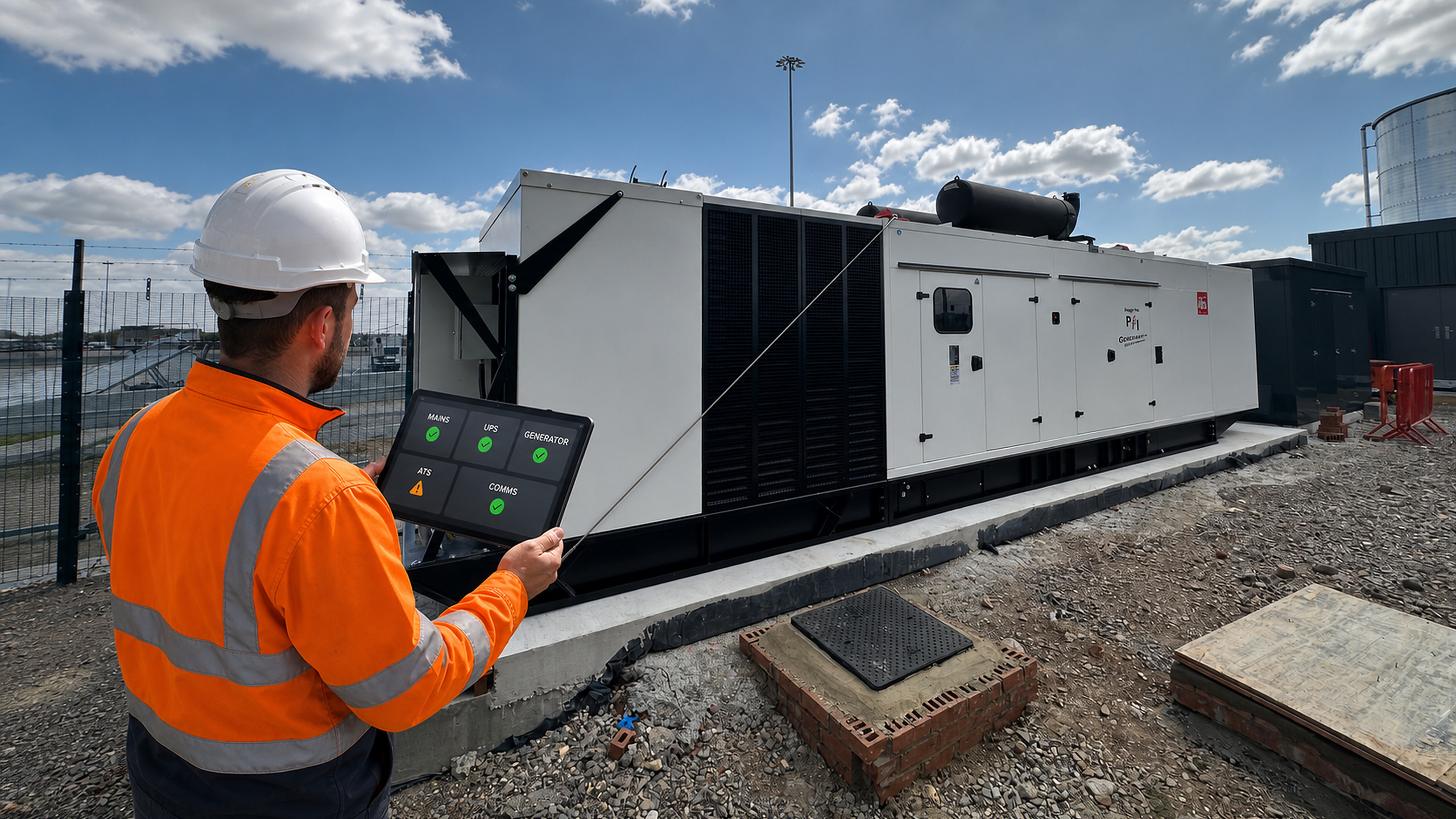
2 October 2026
A BMS can show that a generator is running or that a UPS has a...
Read more...
Generator Fuel Autonomy: How Many Hours of Backup Power Does Your Site Need?

25 September 2026
'How many hours will the generator run?' sounds like a simple fuel-tank question. In practice,...
Read more...
How Often Should an Automatic Transfer Switch Be Tested?

18 September 2026
An automatic transfer switch may remain in one position for months, then be expected to...
Read more...
UPS Fan Fault: Causes, Risks and Safe Next Steps

11 September 2026
Fans remove heat from power electronics, filters, transformers and other UPS components. If a fan...
Read more...
Backup Power for Wastewater Pumping Stations During Peak Wet Weather

1 September 2026
A power failure at a wastewater pumping station is difficult at any time. During prolonged...
Read more...
View all