

Latest News
Learn what happens during a critical power site survey, including generator sizing, UPS autonomy, ATS checks, fuel storage, access, ventilation, noise and future expansion.

A reliable critical power system starts with understanding the site.
Before recommending a generator, UPS, ATS, maintenance plan or replacement project, engineers need to know what the system is expected to protect, how the site operates and what risks need to be reduced.
That is the purpose of a critical power site survey.
A good survey is not just a quick look at the available space. It is a practical review of the site’s electrical infrastructure, critical loads, access constraints, installation environment, fuel requirements, noise considerations, existing equipment and future resilience needs.
For facilities managers, estates teams, contractors and operations managers, a site survey helps turn uncertainty into a clear plan. It gives you a better understanding of what is needed, what is possible and what risks should be addressed before a quote is issued.
This guide explains what happens during a critical power site survey and why it is an important first step for generator installation, UPS replacement, standby power upgrades and service planning.
What is a critical power site survey?
A critical power site survey is a technical assessment of your site’s backup power requirements.
It helps establish what equipment is needed, where it can be installed, how it will connect to the existing electrical infrastructure and what risks need to be considered.
Depending on the requirement, the survey may focus on:
- Standby generator installation
- Generator replacement
- Temporary generator hire
- UPS replacement or upgrade
- UPS battery replacement
- ATS or changeover requirements
- Load bank testing
- Fuel storage and runtime
- Critical power maintenance
- Emergency response planning
- Future site expansion
The survey gives both the customer and the supplier a clearer picture before work begins. That reduces the risk of incorrect sizing, poor installation planning, missed constraints or unexpected costs later in the project.
In simple terms, the survey helps answer:
What does this site need, and what is the safest, most practical way to deliver it?
Why a site survey matters before quoting
A quote based only on a rough generator size or a brief description can miss important details.
Every site is different. Two buildings may both need a 200kVA generator on paper, but the practical requirements could be completely different once access, cable routes, changeover arrangements, fuel storage, noise, load profile and installation space are reviewed.
A proper site survey helps avoid assumptions.
It can identify:
| Survey finding | Why it matters |
| Actual critical load | Prevents over-sizing or under-sizing |
| Starting loads | Important for motors, pumps, compressors and HVAC |
| Existing distribution setup | Determines how the system can connect safely |
| ATS or manual changeover needs | Affects resilience and response time |
| Cable route constraints | Impacts installation cost and practicality |
| Generator location | Affects access, ventilation, noise and security |
| Fuel storage requirements | Determines runtime and compliance considerations |
| Noise-sensitive surroundings | May require acoustic treatment or further assessment |
| UPS runtime needs | Confirms battery autonomy and load protection |
| Future expansion | Prevents the system becoming unsuitable too quickly |
| Existing asset condition | Helps decide whether to repair, upgrade or replace |
The value of the survey is not just in confirming what you already know. It is in finding the things that may otherwise be missed.
Step 1: Understanding the site’s critical power requirement
The first stage is to understand why backup power is needed.
This is where the engineer will ask questions about the site, the business and the consequences of power loss. The aim is to understand the risk before looking at the equipment.
Typical questions include:
- What systems must remain operational during a power cut?
- Is the requirement temporary or permanent?
- Is the site operational 24/7?
- What happens if power is lost?
- How quickly does power need to be restored?
- Is automatic changeover required?
- Are there life-safety, clinical, production or process-critical loads?
- Is a UPS required to bridge the gap before a generator starts?
- Is this part of a planned upgrade, emergency requirement or long-term resilience review?
- Are there existing generator or UPS assets on site?
This stage matters because critical power is not just about equipment. It is about what the equipment protects.
A generator for a small commercial site, a healthcare estate, a wastewater pumping station, a data centre or a manufacturing facility may all require different levels of resilience.
Step 2: Reviewing existing loads and future demand
Correct load assessment is one of the most important parts of the survey.
The engineer will look at the electrical demand the generator or UPS may need to support. This may include the whole site or only selected critical loads.
The assessment may consider:
- Current site load
- Critical and non-critical loads
- Starting currents
- kW and kVA requirements
- Power factor
- Load sequencing
- Single-phase or three-phase supply
- Motor loads
- Pumps
- HVAC systems
- IT and communications equipment
- Process or production equipment
- Future expansion plans
This is particularly important where motors, pumps, compressors or large mechanical systems are involved. These can have high starting currents, meaning the generator may need to support more than just the normal running load.
A good survey should also look beyond today’s requirement. If the site is expanding, adding equipment or changing how it operates, the power solution should allow for that where possible.
Step 3: Inspecting electrical infrastructure and distribution
A critical power system needs to connect safely and practically to the existing electrical infrastructure.
During the survey, engineers may review:
| Area | What is being checked |
| Main incoming supply | Voltage, phase arrangement and supply characteristics |
| Distribution boards | Where critical loads are supplied from |
| Switchgear | Suitability for connection or modification |
| Existing generator connection points | Whether temporary or permanent connections are available |
| Cable routes | Practical and safe routes for power cables |
| Earthing arrangements | Important for safe system design |
| Isolation points | How work can be carried out safely |
| Space for new equipment | Whether panels, ATS or distribution equipment can be accommodated |
| Existing protection devices | Whether coordination or upgrade is needed |
For construction sites or temporary electrical arrangements, the Health and Safety Executive’s HSG141 guidance is aimed at those responsible for planning, managing and controlling the installation and use of electrical systems and equipment on construction sites. It highlights the need for proper planning and management of electrical risks, which is highly relevant when temporary generation or site power is involved.
The practical point is simple: the electrical arrangement needs to be understood before a safe and reliable solution can be proposed.
Step 4: Generator location, access and installation constraints
If the survey relates to a generator, location is a major consideration.
The generator needs to be positioned where it can operate safely, be maintained properly and connect practically to the building or site infrastructure.
The survey may check:
- Space for the generator
- Vehicle access for delivery
- Hiab or crane access
- Ground conditions
- Base or plinth requirements
- Cable routes
- Exhaust discharge
- Ventilation and airflow
- Noise-sensitive boundaries
- Security
- Flood risk
- Access for refuelling
- Access for routine servicing
- Access for emergency response
A generator may be technically suitable, but if it cannot be delivered, positioned, ventilated, fuelled or maintained safely, it is not the right solution for the site.
This is why site access should be reviewed early, not after equipment has been specified.
Step 5: Ventilation, exhaust and heat management
Generators and UPS systems both produce heat, but in different ways.
A generator needs sufficient airflow for combustion and cooling. It also needs safe exhaust discharge. If airflow is restricted, the generator may overheat or fail to perform correctly under load.
A UPS installation may need temperature control to protect batteries and electronics. Poor ventilation, high ambient temperature or cramped electrical rooms can reduce reliability and shorten battery life.
During a survey, engineers may consider:
| Equipment | Environmental considerations |
| Generator | Intake air, cooling airflow, exhaust route, heat rejection, enclosure ventilation |
| UPS | Ambient temperature, cabinet clearance, airflow, battery environment, room cooling |
| Fuel tank | Location, bunding, access, security and environmental protection |
| ATS/switchgear | Clearances, accessibility, heat, dust and environmental conditions |
Environmental conditions are not minor details. They directly affect reliability, maintenance and long-term performance.
Step 6: Fuel storage, runtime and refuelling
For generator installations, fuel planning is essential.
The site survey should establish how long the generator needs to run, what load it will support and how fuel will be stored, monitored and replenished.
Key questions include:
- How long does the generator need to support the site?
- What fuel tank size is required?
- Is the generator for standby use or regular use?
- Is there space for a base tank or bulk tank?
- Can fuel be delivered safely?
- Is there access for a tanker?
- Is fuel theft or tampering a risk?
- How will fuel quality be maintained?
- Is fuel polishing or sampling required?
- Are environmental controls needed?
UK government guidance states that business oil storage rules apply to certain generators with connected oil supply tanks of 201 litres or more, including standby generators kept for emergency use. The guidance also sets out requirements around container strength and preventing leaks or bursts in ordinary use.
For critical sites, fuel planning should not only focus on capacity. It should also consider the condition of the fuel, the ability to refuel during an extended outage and the practical response plan if mains power is unavailable for longer than expected.
Step 7: Noise and acoustic considerations
Generator noise can affect where equipment can be located and whether acoustic treatment is needed.
This is especially important for sites near:
- Residential properties
- Hospitals or healthcare buildings
- Schools
- Offices
- Public areas
- Hotels
- Care homes
- Noise-sensitive boundaries
During the survey, engineers will consider the proposed generator location, likely operating conditions and whether an acoustic enclosure, attenuator, exhaust silencer or further noise assessment may be needed.
The Environment Agency’s method implementation document for BS 4142 states that BS 4142 is used to assess industrial sound and is appropriate for assessing sound levels outside a building from industrial premises, manufacturing premises or fixed installations.
For generator projects, this does not mean every site needs a formal noise assessment. It does mean noise should be considered early, particularly where a generator may operate near sensitive receptors or as part of a planning-sensitive installation.
Step 8: ATS, changeover and control requirements
A generator is only one part of the standby power system.
The survey should consider how the site will transfer from mains power to generator power. This may involve an automatic transfer switch, manual changeover arrangement or more complex control system.
Key considerations include:
| Requirement | Why it matters |
| Automatic transfer | Reduces reliance on manual intervention |
| Manual changeover | May be suitable for lower-risk or temporary arrangements |
| Generator start signal | Ensures the generator responds when required |
| Return-to-mains sequence | Prevents unsafe or unstable transfer |
| Load sequencing | Helps manage large or staged electrical loads |
| Controls and alarms | Supports visibility and response |
| Remote monitoring | Helps facilities teams manage assets across sites |
| Integration with BMS | May support alerts, reporting and escalation |
For higher-risk sites, an ATS can be essential. If the mains fails and no one is present to switch manually, the backup power system may not protect the site quickly enough.
A critical power survey should therefore review not only the generator, but also how power will transfer and how the system will be controlled.
Step 9: UPS autonomy and battery condition
If the survey relates to a UPS, the focus will shift towards runtime, battery condition and the critical loads being protected.
The engineer may assess:
- UPS rating
- Current load percentage
- Required runtime
- Battery age
- Battery condition
- Battery cabinet arrangement
- Room temperature
- Ventilation
- Maintenance history
- Alarm logs
- Bypass arrangements
- Future load growth
- Whether the UPS integrates with generator support
UPS autonomy is the amount of time the UPS can support the connected load. This is often misunderstood because the original runtime may no longer be accurate if batteries have aged or if extra equipment has been added.
A UPS site survey should therefore ask:
Does the UPS still provide the runtime the site thinks it does?
If the answer is unclear, battery testing, runtime review or UPS replacement planning may be needed.
Step 10: Compliance, safety and risk priorities
A site survey is also a chance to identify compliance and safety considerations that may affect the project.
This may include:
- Electrical safety
- Isolation and access arrangements
- Fuel storage
- Noise
- Fire safety considerations
- Environmental protection
- Working at height
- Confined or restricted access
- DSEAR considerations where relevant
- Healthcare, utilities or sector-specific requirements
- Maintenance access
- Documentation and test records
Not every survey will require the same level of compliance review. A generator for a temporary event is different from a permanent generator for a hospital, water site or data centre.
The purpose of the survey is to understand which risks apply to your site and what needs to be considered before recommendations are made.
Step 11: Future expansion and lifecycle planning
A critical power system should not only reflect today’s load. It should consider where the site is going.
During the survey, engineers may ask about:
- Planned building expansion
- New equipment
- Additional EV charging
- New production lines
- New IT or server loads
- Additional HVAC equipment
- Future clinical, industrial or operational changes
- Known electrical upgrades
- Expected increase in site occupancy
- Potential need for redundancy
This helps avoid designing a solution that is suitable today but quickly becomes too small, difficult to expand or costly to modify.
For permanent generator and UPS projects, future flexibility can be just as important as immediate capacity.
What information should you prepare before a site survey?
You do not need to have every answer before booking a survey, but a few details can make the visit more productive.
Useful information includes:
| Information | Why it helps |
| Existing electrical drawings | Helps engineers understand distribution and connections |
| Load information | Supports sizing and design |
| Current generator or UPS details | Helps assess condition and suitability |
| Maintenance records | Shows history, faults and previous recommendations |
| Site access information | Helps plan delivery, installation or servicing |
| Fuel tank details | Supports runtime and compliance review |
| Critical load list | Clarifies what must remain operational |
| Photos of plant rooms or equipment | Helps early review before visit |
| Future expansion plans | Helps avoid short-term specification |
| Known issues or alarms | Guides investigation during the survey |
If you do not have this information, the survey can still go ahead. The engineer may simply need to gather more information on site.
What happens after the survey?
After the site survey, you should expect a clearer recommendation.
Depending on the requirement, this may include:
- Generator size recommendation
- UPS replacement recommendation
- Battery replacement advice
- ATS or changeover recommendation
- Fuel storage or runtime recommendation
- Site access considerations
- Acoustic or ventilation considerations
- Maintenance or testing recommendations
- Temporary power proposal
- Installation approach
- Budget quotation
- Next steps
A good recommendation should explain not only what is being proposed, but why.
That is important. Customers should understand the reasoning behind the solution, especially where the system is protecting critical operations.
Common problems a site survey can uncover
A critical power site survey often reveals risks that are not obvious at first glance.
| Issue found | Why it matters |
| Generator too small for current load | Site may be exposed during outage |
| UPS runtime no longer sufficient | Critical systems may shut down too soon |
| Poor generator location | Access, noise, cooling or security issues |
| No safe cable route | Installation may be more complex than expected |
| Fuel tank too small | Runtime may not match outage risk |
| Fuel condition unknown | Generator reliability may be reduced |
| No ATS or unclear changeover process | Response may depend on manual intervention |
| Poor ventilation | Generator or UPS may overheat |
| Missing maintenance records | Risk is harder to assess |
| Site load has changed | Existing backup power may no longer be suitable |
| No temporary power plan | Upgrades or failures may leave the site exposed |
Finding these issues early gives you time to plan properly.
Is a site survey only needed for large projects?
No.
A site survey can be valuable for large projects, but it is also useful for smaller sites where the consequences of getting it wrong would be high.
You may benefit from a survey if:
- You are considering a new generator
- You need to replace an old generator
- You are reviewing UPS runtime
- You have had recent alarms or faults
- You need temporary generator hire
- You are planning a shutdown
- You are expanding your site
- You are unsure what size generator you need
- You need to connect a temporary generator safely
- You want to review backup power risk
- You need better maintenance records
- Your site supports critical operations
The value of the survey is not based only on project size. It is based on risk.
How P&I Group can help
P&I Group carries out critical power site surveys for organisations that depend on reliable power.
Our engineers can assess your site, understand your critical loads and recommend a practical solution based on your operational requirements.
We can support with:
- Generator site surveys
- UPS site surveys
- Critical power reviews
- Generator sizing
- UPS autonomy assessment
- ATS and changeover planning
- Generator supply and installation
- Temporary generator hire
- Generator replacement planning
- Fuel storage and fuel management advice
- Acoustic and location considerations
- Planned maintenance recommendations
- Emergency response planning
Our approach is practical and engineer-led. We help you understand the condition of your site, explain the options clearly and recommend what is right for your operation.
Conclusion
A critical power site survey is not just a step before a quote. It is the foundation for a reliable backup power solution.
By reviewing loads, distribution, access, ventilation, fuel, noise, ATS requirements, UPS autonomy, compliance considerations and future expansion, a survey helps reduce uncertainty before work begins.
For facilities managers, estates teams, contractors and operations managers, this provides confidence that the recommendation is based on the site’s actual needs, not assumptions.
If your site depends on backup power, the first step is understanding the risk clearly.
Book a critical power site survey with P&I Group.
A critical power site survey is a technical review of your site’s backup power requirements. It helps assess loads, existing electrical infrastructure, generator or UPS needs, access, installation constraints, fuel, ventilation, noise and future resilience requirements.
In most commercial or critical applications, yes. A site survey helps confirm the right generator size, location, connection method, fuel arrangement and installation requirements. It reduces the risk of incorrect specification.
A generator site survey may check critical loads, starting currents, distribution boards, cable routes, generator location, delivery access, ventilation, exhaust, noise constraints, fuel storage, ATS requirements and maintenance access.
A UPS site survey may check the existing UPS rating, load, battery age, runtime requirements, room temperature, ventilation, bypass arrangements, alarms, maintenance history and future load growth.
The time required depends on the size and complexity of the site. A simple survey may be relatively quick, while larger estates, hospitals, utilities, data centres or industrial sites may require a more detailed assessment.
Useful information includes electrical drawings, current load information, generator or UPS details, maintenance records, site access information, fuel tank details, critical load lists and any known faults or alarms.
Yes. A site survey can help confirm the correct temporary generator size, connection point, cable route, access, fuel requirements and safe positioning before hire equipment is delivered.
It can help inform that decision. If the requirement is temporary, hire may be more suitable. If the site has an ongoing resilience requirement, a permanent generator may be better. The survey helps clarify the risk, timescale and practical options.
A site survey can identify compliance and safety considerations that may affect the project, such as electrical safety, fuel storage, noise, access and environmental constraints. The depth of review depends on the site and project type.
After the survey, you should receive a clearer recommendation or quotation. This may include generator sizing, UPS recommendations, ATS requirements, fuel storage advice, installation considerations, maintenance recommendations and next steps.
Latest news
What Happens During a Critical Power Site Survey?
16 October 2026
A reliable critical power system starts with understanding the site. Before recommending a generator, UPS,...
Read more...
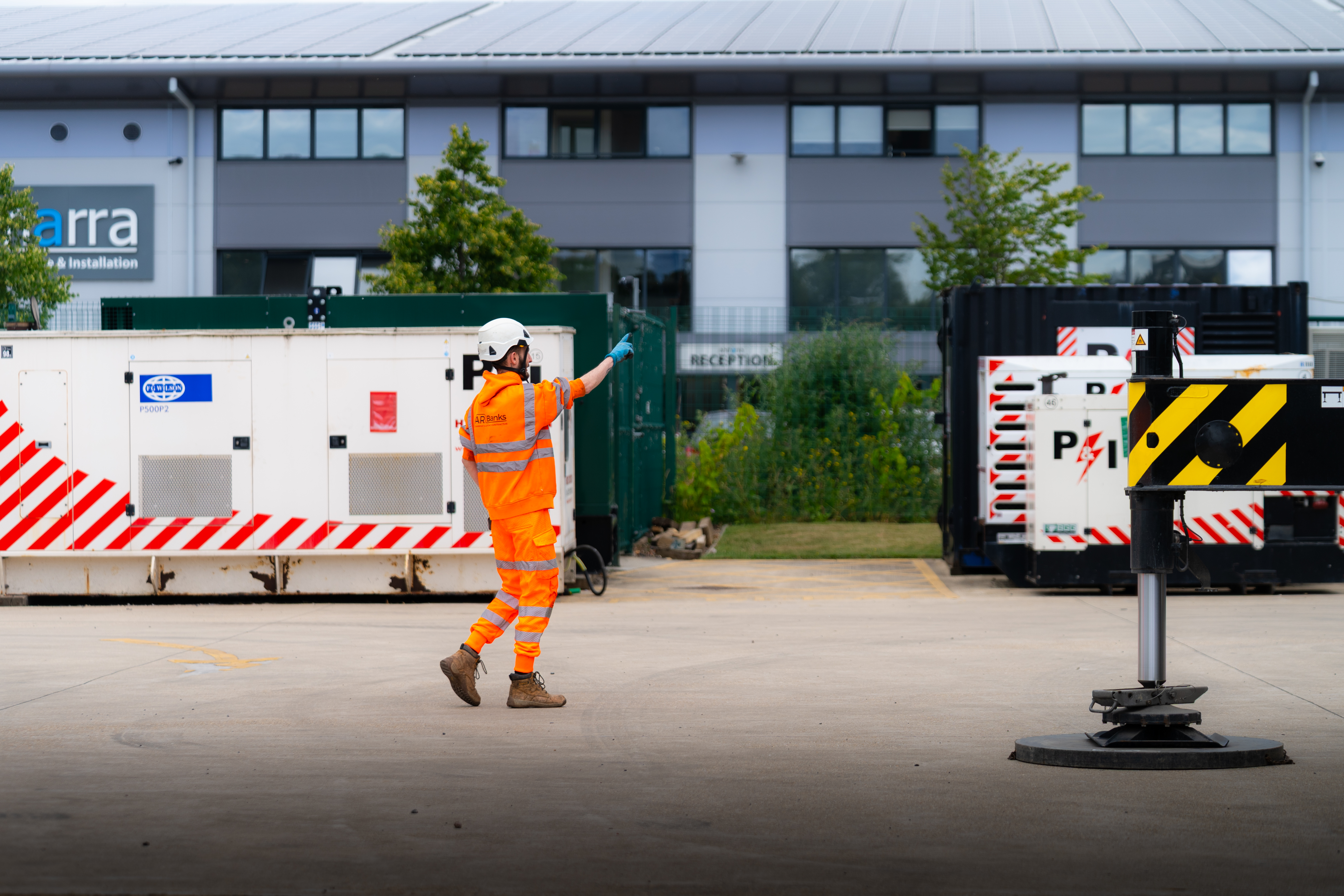
Temporary Power for Planned Shutdowns: A Site-Readiness Checklist
8 October 2026
A planned electrical shutdown should be easier to manage than an emergency outage. The date...
Read more...
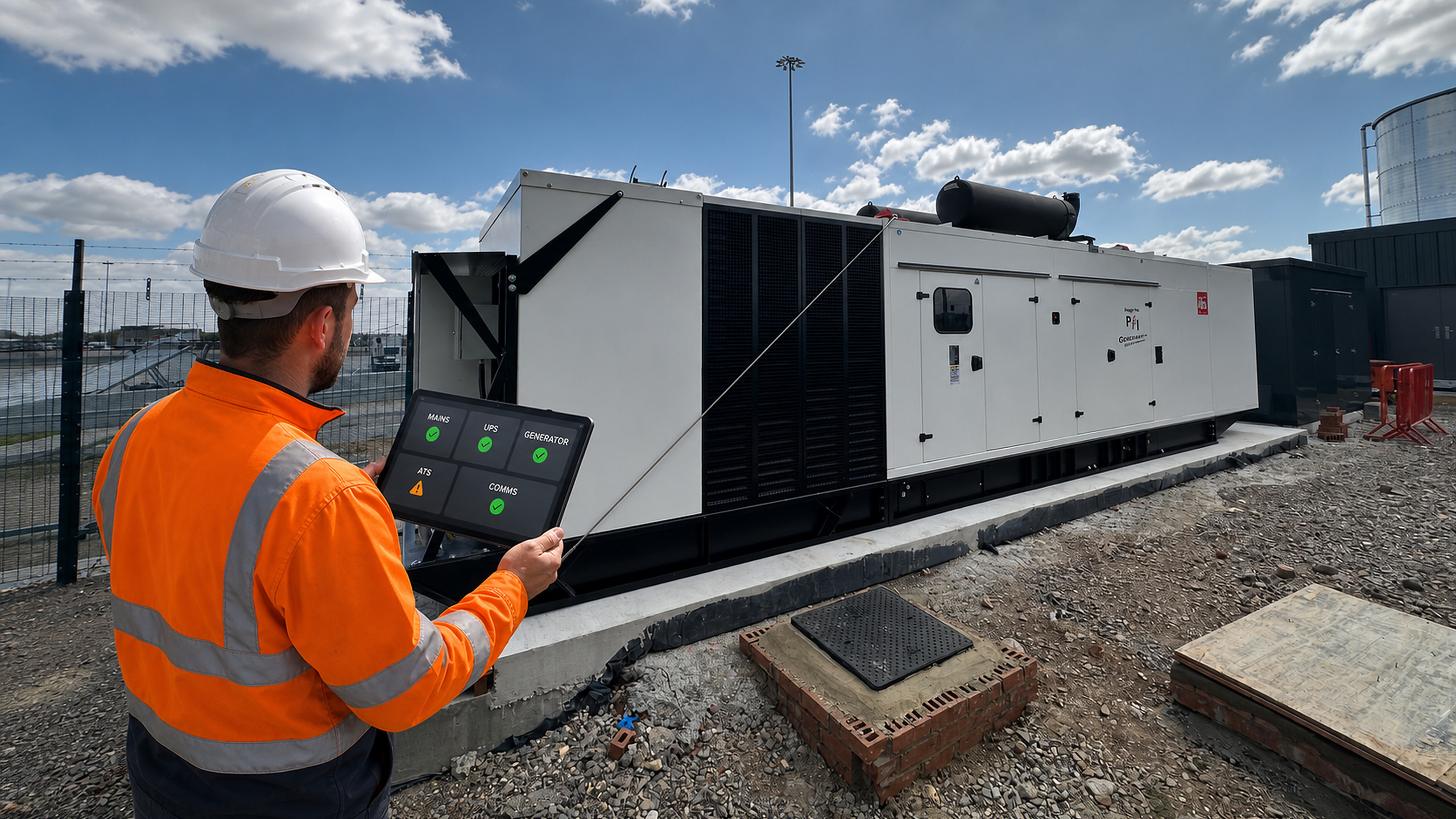
What Signals Should a UPS or Generator Send to a BMS?
2 October 2026
A BMS can show that a generator is running or that a UPS has a...
Read more...
Generator Fuel Autonomy: How Many Hours of Backup Power Does Your Site Need?

25 September 2026
'How many hours will the generator run?' sounds like a simple fuel-tank question. In practice,...
Read more...
How Often Should an Automatic Transfer Switch Be Tested?

18 September 2026
An automatic transfer switch may remain in one position for months, then be expected to...
Read more...
View all