

Latest News
Planning a new generator project? See how P&I Group uses in-house 3D design to plan practical, bespoke backup power systems before installation begins.

When a business starts looking for a new generator, the first question is often simple: what size generator do we need?
That question matters, but it is only one part of a much bigger project.
A successful generator installation is not just about choosing a kVA rating and placing an order. It is about designing a complete backup power solution around the site, the load, the available space, the fuel strategy, the electrical infrastructure and the risks that would follow a power failure.
At P&I Group, generator projects are planned around real-world site conditions. That can include site surveys, load assessments, generator sizing, fuel tank positioning, acoustic considerations, access planning, cable routes, control systems, ATS integration, commissioning and future maintenance access.
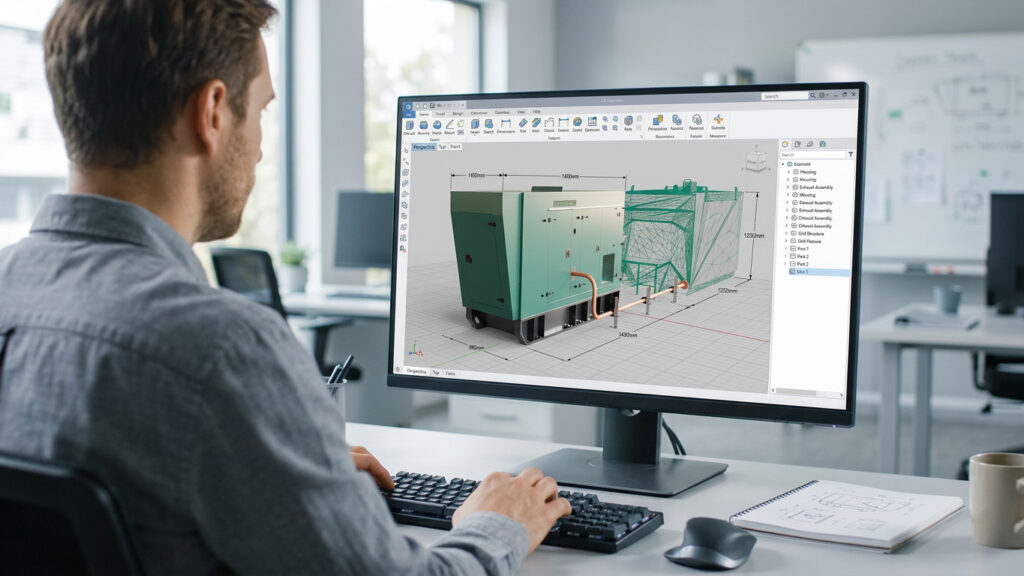
For more complex projects, in-house 3D design can help bring those details together before work begins on site.
Quick answer: what is bespoke generator design?
Bespoke generator design is the process of planning a generator system around the specific requirements of a site. This may include the generator size, fuel tank arrangement, acoustic enclosure, airflow, cable routes, access requirements, lifting plan, control system, ATS integration and long-term maintenance needs.
Rather than treating the generator as a standalone item of equipment, bespoke design considers how the full system will work in practice. It connects the early planning stage with generator installation, commissioning, maintenance and long-term resilience.
Why generator projects need more than a standard specification
Many commercial and industrial generator projects start with a basic requirement: the site needs backup power.
However, two sites with the same generator size can still need very different solutions.
A healthcare estate may need to protect clinical areas, life safety systems and essential building services. A water or wastewater site may need standby power for pumps, telemetry and control equipment. A data centre may need a system that supports resilience, redundancy and future expansion. A manufacturing site may need to protect production, refrigeration, process equipment or shift continuity.
This is why generator design needs to account for more than output alone.
A well-planned project should consider:
- what the generator needs to support
- whether the load includes motors, pumps, HVAC or other equipment with high starting currents
- where the generator can be safely located
- how fuel will be stored, delivered and maintained
- whether noise limits or acoustic treatment are required
- how engineers will access the generator for servicing
- how the generator connects into the existing electrical infrastructure
- whether a UPS, ATS or control panel is part of the wider system
- how the installation can be completed with minimal disruption
This early planning helps reduce risk before the project reaches the delivery stage. It also helps make sure the proposed generator is suitable for the site, not just suitable on paper.
Turning a site survey into a practical generator layout
A critical power site survey is often the starting point for a generator supply and installation project. It helps move the conversation from “we need a generator” to “this is how the system can work safely and practically on this site”.
During the survey, engineers can assess the existing infrastructure, available space, access routes, electrical connection points, fuel requirements and any site-specific risks. This information helps shape the design, rather than forcing the site to fit a generic generator arrangement.
For example, the survey may identify that a generator needs to be positioned in a tight external compound, near existing services or close to a building with noise-sensitive areas. It may reveal that fuel tank access needs to be improved, that a cable route needs careful planning, or that a temporary generator hire arrangement is required while replacement works take place.
This is where design becomes practical.
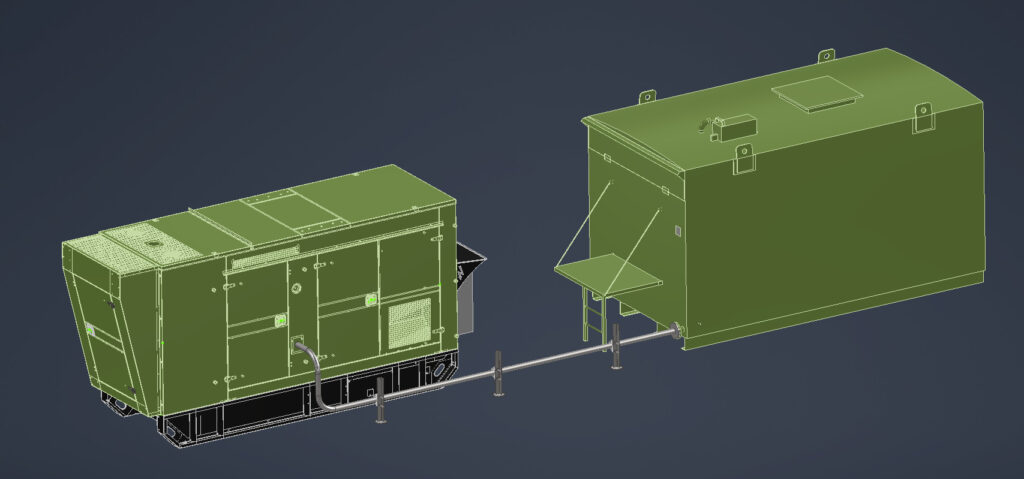
A 3D render can help visualise the proposed arrangement before installation. It can show the generator, fuel tank, pipework, access space and surrounding constraints in a way that is easier for project teams, facilities managers and stakeholders to understand.
Designing around the generator and the fuel tank
The fuel tank is not an afterthought. For many standby generator projects, fuel strategy is central to the design.
The size and location of the tank can affect runtime, access, compliance, refuelling, maintenance and the overall footprint of the installation. A generator may be technically suitable for the load, but the wider project can still be compromised if the fuel arrangement is not properly considered.
Design questions may include:
- How long does the generator need to run during an outage?
- Is the tank integral, base-mounted or separate?
- Can fuel be delivered safely and efficiently?
- Is there suitable access for inspection and maintenance?
- Are there environmental or bunding considerations?
- Is the tank positioned to support safe pipework routes?
- Does the layout leave enough space for future maintenance?
By considering the generator and fuel tank together, the final system is more likely to be practical, reliable and maintainable. This can also support the wider fuel strategy, including generator refuelling, fuel polishing and fluid testing over the life of the installation.
Why access and service space matter
A generator installation should not only work on day one. It needs to remain serviceable throughout its life.
That means engineers need safe and practical access to key components. Filters, batteries, control panels, radiators, doors, cable entries, exhaust routes and fuel connections all need to be considered during the planning stage.
Poor access can make routine maintenance harder, increase downtime and create avoidable risk when urgent work is required. In critical environments, that matters.
A 3D layout can help identify potential access issues before equipment is delivered. It can also help confirm whether doors can open fully, whether engineers can work safely around the set and whether there is enough space for lifting, replacement parts or future upgrades.
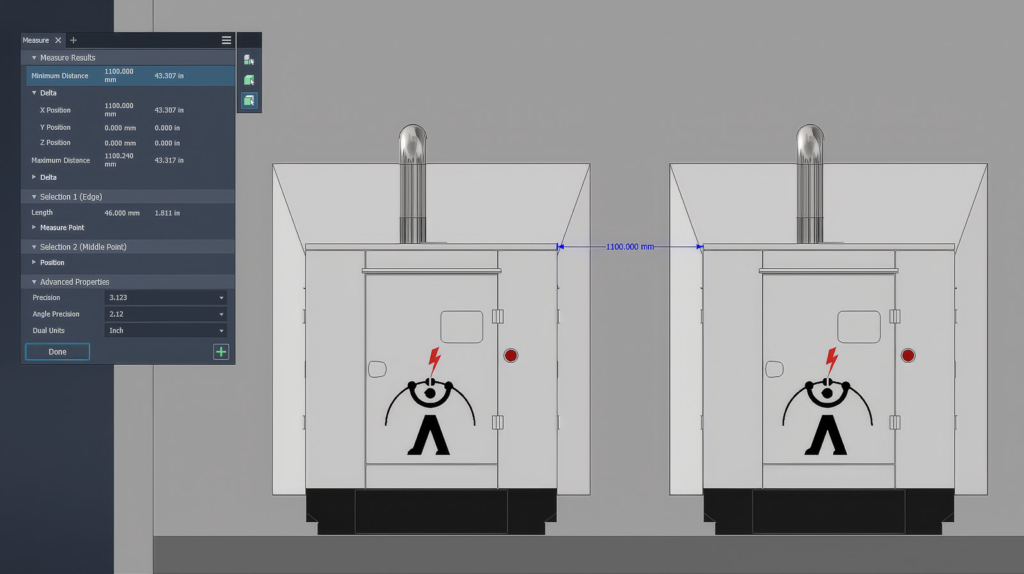
Once the generator is installed, planned generator service and maintenance becomes much easier when access has been considered from the beginning. That is why layout design should always take long-term maintenance into account, not just delivery and positioning.
Acoustic enclosures, airflow and site constraints
Many commercial standby generators are installed in acoustic enclosures or weatherproof canopies. These help protect the generator and manage noise, but they also affect airflow, heat rejection, access and footprint.
Noise requirements can be particularly important near hospitals, schools, offices, residential boundaries and public-facing sites. A generator that is correctly sized electrically still needs to be suitable for the environment around it.
This is where design, specification and practical site knowledge need to work together. For more detail on this topic, see our guide to generator noise levels and acoustic enclosure requirements.
Design considerations may include:
- acoustic enclosure requirements
- radiator airflow and ventilation
- exhaust discharge route
- distance from buildings, windows and boundaries
- service access around the enclosure
- planning or environmental constraints
- site security and safe working zones
These details are easier to resolve at design stage than during installation.
Connecting the generator into the wider power system
A standby generator is usually part of a larger critical power system.
Depending on the site, this may include an automatic transfer switch, control panel upgrades, UPS systems, distribution equipment, telemetry, remote monitoring or temporary power arrangements during works.
The generator must be selected and installed so it works with this wider infrastructure. The system needs to transfer correctly, support the required load, operate safely and be tested under suitable conditions.
For sites that also require battery-backed protection, the generator may need to work alongside a UPS system. A UPS can help support critical loads during the short period before the generator starts and the ATS transfers. For industrial environments, this can also help reduce the risk created by power fluctuations, as explained in our guide to protecting industrial equipment with a UPS.
This is especially important for sites where power interruption could affect essential services, production, compliance, safety or business continuity.
Planning installation with minimal disruption
For many organisations, the challenge is not only installing the generator. It is installing it without disrupting the site.
Generator replacement or new installation works may need to be coordinated around planned shutdowns, temporary power, crane lifts, fuel works, electrical changeovers, commissioning windows and stakeholder approvals.
Good planning helps answer questions such as:
- When can the site safely accept an outage?
- Is temporary power required during the works?
- Are there lifting or delivery restrictions?
- Can the generator be positioned without affecting live operations?
- Who needs to approve the layout before installation?
- What testing and commissioning will be required before handover?
The earlier these questions are answered, the smoother the project is likely to be. This is also why generator projects benefit from structured project management, especially when works involve live sites, critical infrastructure or multiple stakeholders.
Where 3D generator design adds value
A 3D render is not just a nice image. Used properly, it can support better project decisions.
It helps clients and project teams see how the generator, fuel tank and surrounding infrastructure will fit together. It can highlight practical considerations such as access, clearance, pipework, enclosure position and available working space.
For facilities managers, estates teams and project stakeholders, this can make the proposed solution easier to review. For engineers, it can help identify design improvements before site works begin.
This is particularly useful for:
- bespoke generator installations
- generator replacement projects
- sites with limited space
- generator and fuel tank installations
- healthcare, utilities, data centre and industrial environments
- projects requiring stakeholder sign-off
- multi-generator installations
- projects where access, noise or disruption need careful planning
Designing for larger and multi-generator projects
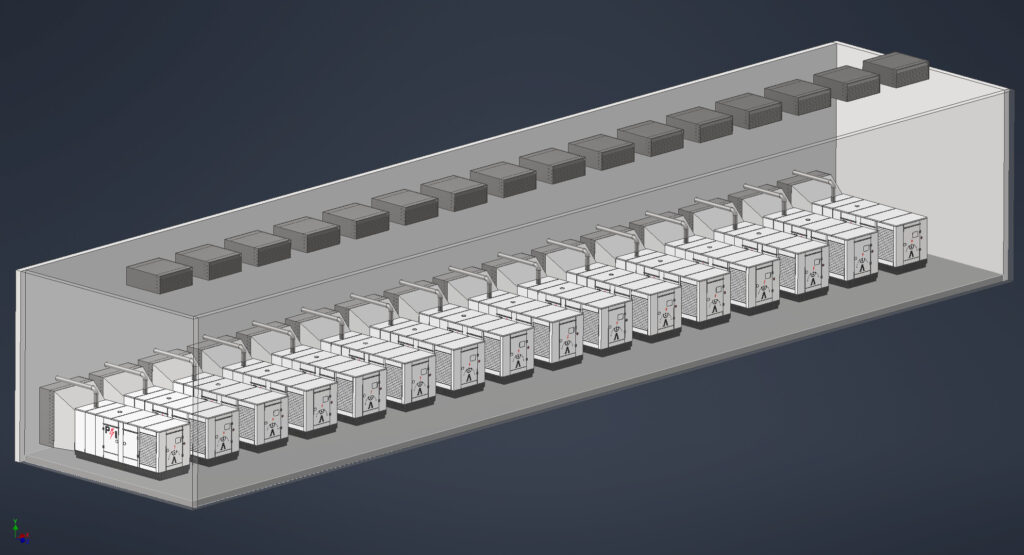
Not every generator project involves one set and one tank. Larger critical power projects may involve multiple generators, fuel systems, control panels, synchronisation, switchgear, airflow planning and staged installation works.
In these environments, layout planning becomes even more important. The design needs to account for how each generator is positioned, how the system will be maintained, how equipment will be accessed in future and how the wider power system will support the site’s resilience requirements.
This is particularly relevant for data centre backup power, where redundancy, uptime and maintainability are all central to the project. For further context, see our guide to the cost of data centre power outages.
Bespoke does not always mean complicated
A bespoke generator project does not always mean a large or unusual installation.
Sometimes it simply means the solution has been properly matched to the site. That could involve a specific tank arrangement, a particular enclosure, a revised cable route, a control panel upgrade, an ATS replacement, a temporary power plan or additional access considerations.
The goal is not to make the project more complex. The goal is to make the final installation more suitable, reliable and easier to manage.
What to consider before requesting a generator quote
If you are planning a new generator supply and installation project, it is useful to gather as much information as possible before speaking to a specialist.
Helpful information includes:
- the site address and type of facility
- the equipment or services that need backup power
- existing generator details, if replacing a set
- available load information
- preferred runtime during an outage
- available space for the generator and fuel tank
- any known noise or planning restrictions
- access limitations for delivery or lifting
- whether temporary power may be required during works
- whether UPS, ATS or control systems are already in place
You do not need to have every answer before starting the conversation. A site survey can help confirm the detail. However, the more information available early on, the easier it is to shape a practical design.
For early-stage planning, you may also find our generator sizing and selection guide and guide to working out how much generator power your business needs useful.
How P&I Group supports generator projects
P&I Group supports organisations with generator supply, installation, hire, servicing, maintenance, UPS systems and wider critical power solutions.
Our work can support new generator installations, replacement projects, ageing infrastructure reviews, emergency power planning and long-term maintenance strategies. We also provide services such as load bank testing, planned generator servicing, UPS support, fuel management and emergency response.
For organisations reviewing wider resilience, our guides to creating an emergency power plan and building a business contingency plan for power emergencies may also be useful.
Speak to P&I Group about your generator project
If you are planning a new generator installation, replacing an ageing set or reviewing backup power for a critical site, our team can help assess your requirements and develop a practical solution around your site.
From initial survey through to design, installation, commissioning and ongoing support, we help make sure your backup power system is planned properly before it is needed most.
Speak to P&I Group about your next generator project.
FAQs about bespoke generator design and installation
A generator supply and installation project can include site survey, generator sizing, fuel tank planning, acoustic enclosure selection, cable route planning, ATS integration, delivery, lifting, electrical installation, commissioning and ongoing maintenance.
A site survey helps confirm the load, available space, access, fuel requirements, ventilation, noise considerations and electrical connection points before the generator is specified. It also helps identify risks that may affect installation, commissioning or future maintenance.
A bespoke generator installation is a backup power solution designed around the specific requirements of a site, rather than using a standard off-the-shelf arrangement. This can include the generator size, tank arrangement, acoustic treatment, access space, controls, ATS, UPS integration and installation method.
Not always. Some generators have base tanks or integral tanks, while larger or longer-runtime installations may need a separate bunded fuel tank. The right option depends on runtime, site layout, refuelling access and compliance requirements.
Yes, in many cases. Planned works, temporary power, careful changeover planning and commissioning windows can help reduce disruption during a generator replacement or new installation.
The right generator size depends on the equipment being supported, the type of load, starting currents, future capacity needs and how the backup system is expected to operate. A site survey and load assessment can help confirm the correct generator size for your business.
Latest news
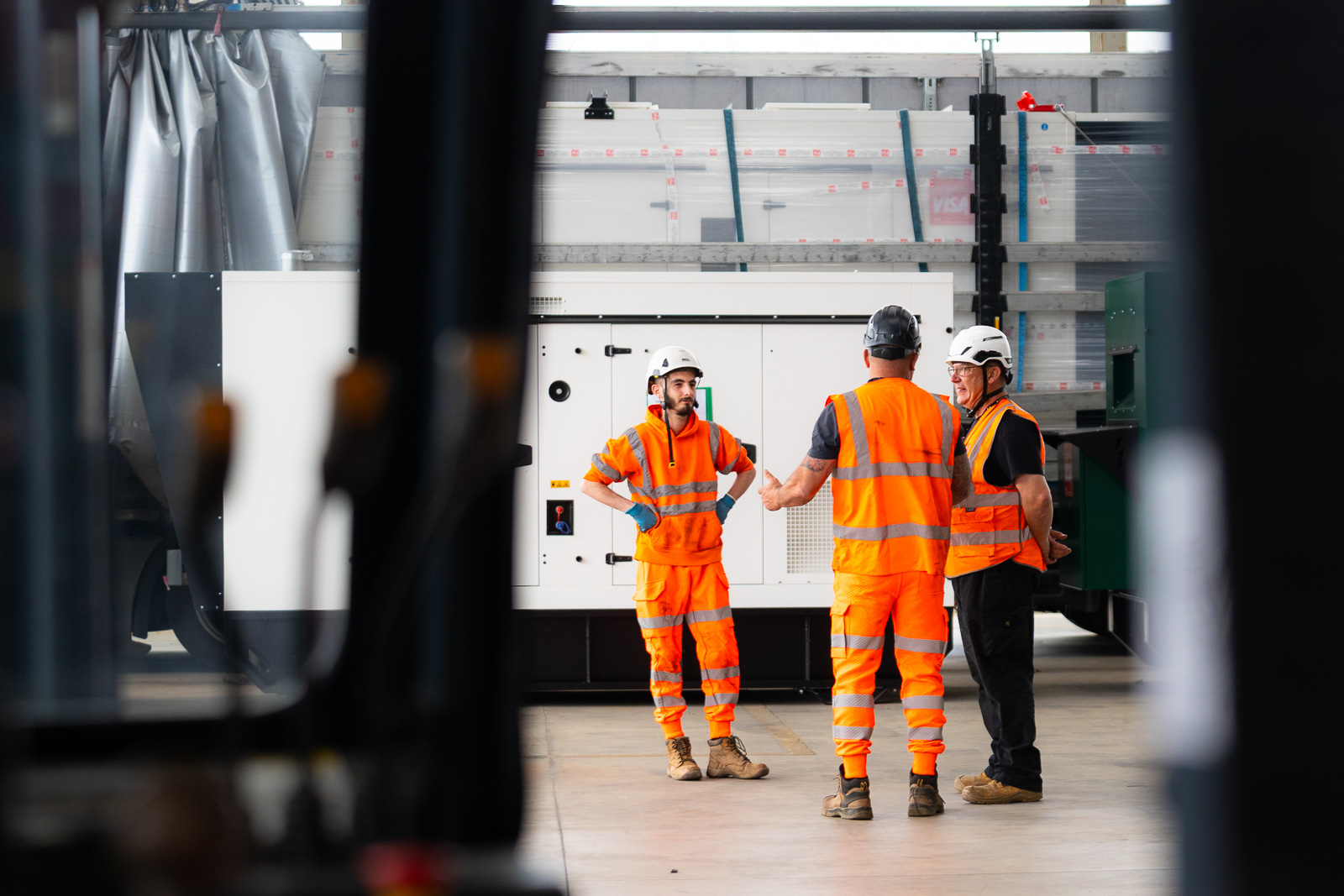
What Happens During a Critical Power Site Survey?
16 October 2026
A reliable critical power system starts with understanding the site. Before recommending a generator, UPS,...
Read more...
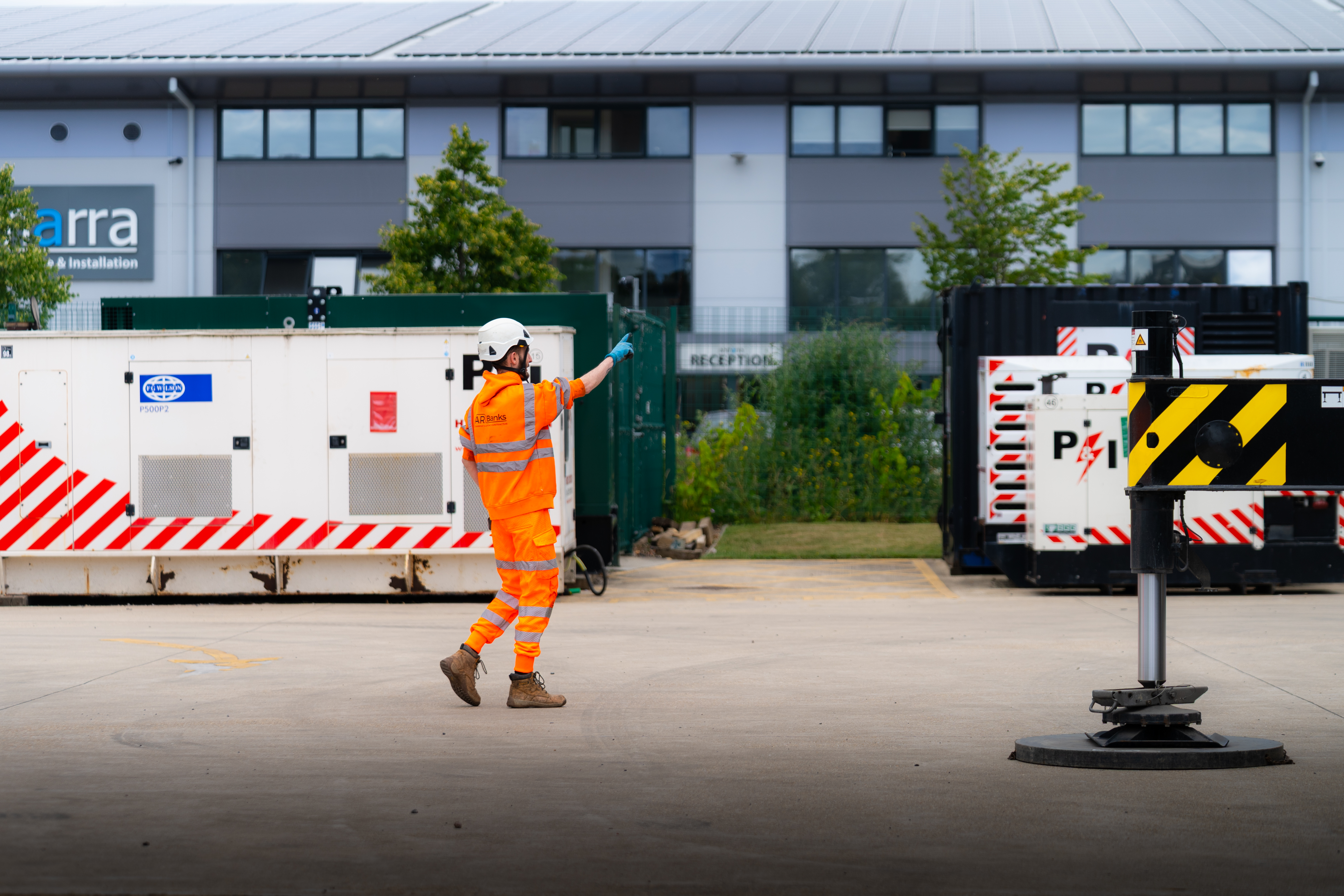
Temporary Power for Planned Shutdowns: A Site-Readiness Checklist
8 October 2026
A planned electrical shutdown should be easier to manage than an emergency outage. The date...
Read more...
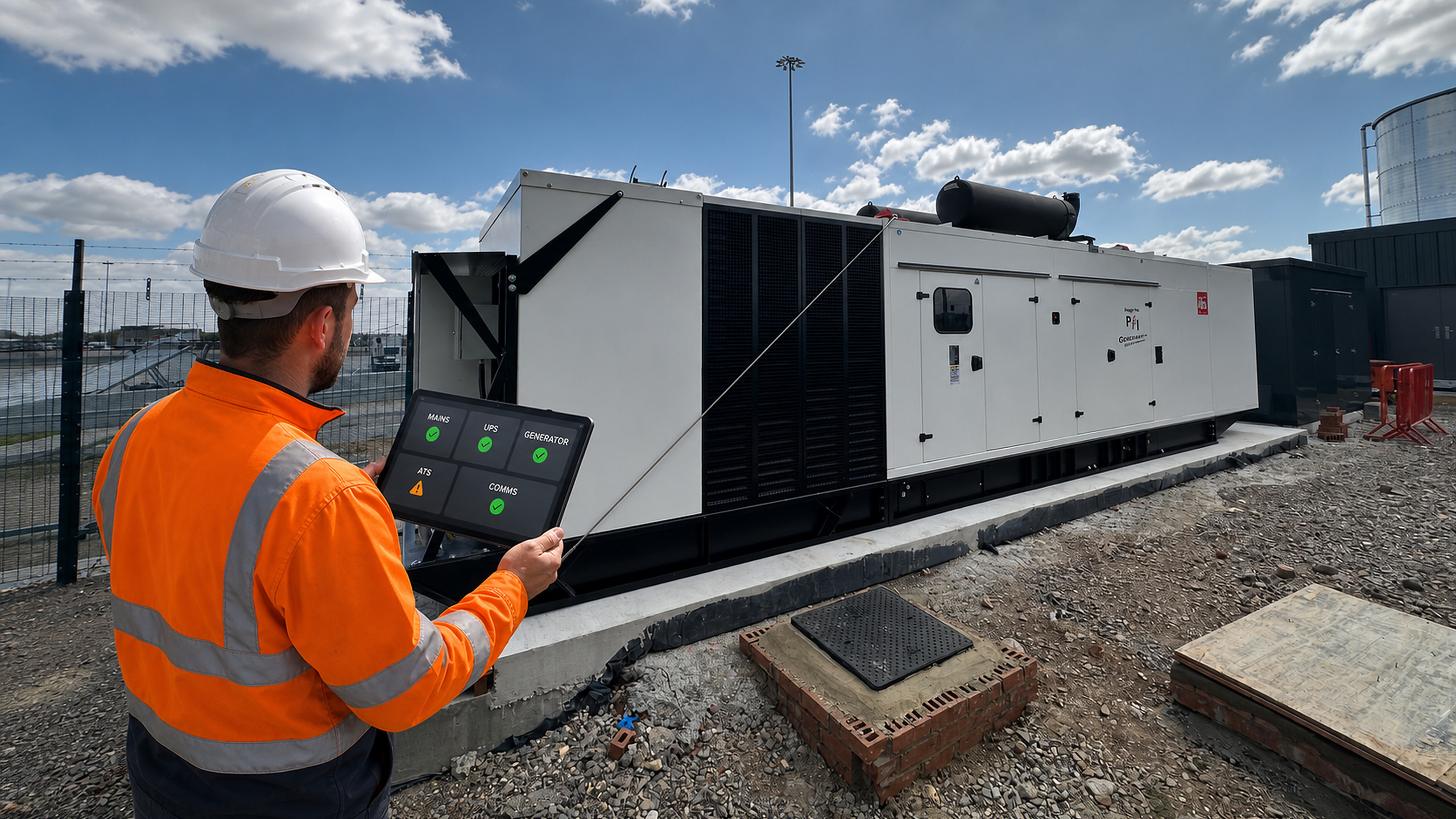
What Signals Should a UPS or Generator Send to a BMS?
2 October 2026
A BMS can show that a generator is running or that a UPS has a...
Read more...
Generator Fuel Autonomy: How Many Hours of Backup Power Does Your Site Need?

25 September 2026
'How many hours will the generator run?' sounds like a simple fuel-tank question. In practice,...
Read more...
How Often Should an Automatic Transfer Switch Be Tested?

18 September 2026
An automatic transfer switch may remain in one position for months, then be expected to...
Read more...
View all