

Latest News
A resilient backup power system ensures your data centre continues operating when the power fails. Learn more with critical power specialist P & I Group.

Power interruptions can bring even the most advanced data centre to a standstill. Every second without power risks data loss, equipment damage and service disruption. A resilient backup power system ensures your data centre continues operating when the mains supply fails, protecting uptime, business continuity and service-level commitments.
Uninterruptible power supply (UPS) systems and standby generators bridge the gap between grid power loss and full recovery. A UPS provides short-term energy to keep servers stable, while a generator delivers long-term support during extended outages. Together, they create layered redundancy, forming a reliable defence against downtime and costly interruptions.
Choosing whether to hire or buy backup equipment depends on your facility’s size, budget and risk tolerance. By understanding how UPS systems and generators work together, you can build a resilient power strategy that keeps your operations secure and your data centre always online.
The importance of backup power in data centres
Reliable backup power safeguards your data centre from power outages, equipment damage and costly downtime. It supports your IT infrastructure, maintains compliance and ensures your servers, cooling systems and networking equipment operate without interruption.
Preventing downtime and data loss
Even a short loss of power can interrupt data processing, corrupt files, shut down virtual servers and trigger lengthy recovery procedures. A well-designed backup system that includes an uninterruptible power supply (UPS) and standby generators activates instantly when you experience an outage, switching seamlessly between power sources to help minimise downtime.
A UPS bridges the gap between the outage and generator start-up, delivering uninterrupted power to critical systems. This prevents service disruption, protects your servers from sudden shutdowns and stabilises voltage during switching events.
When you use a combination of UPS and generators, you create redundant power paths and failover capability. This means your data centre infrastructure remains stable even if one power source fails. That's why backup power systems play a key role in supporting disaster recovery and minimising operational disruptions.
Regular testing of your backup power setup helps ensure it performs as expected when demand spikes. This reduces risk of data loss and supports uptime during planned maintenance or unexpected grid failures.
Ensuring business continuity and compliance
Downtime impacts productivity, but it can also result in breaches of service-level agreements and regulatory standards.
Many industries, including finance and healthcare, require strict uptime and data protection measures. Backup power supports compliance with these standards and helps prevent penalties linked to data unavailability or loss.
For UK data centres, maintaining uninterrupted power is also vital for supporting digital transformation, machine learning, high-density compute and edge-processing workloads that rely on constant access to computing resources.
Protecting equipment and infrastructure
Power interruptions can harm sensitive hardware. Sudden voltage drops or power spikes can damage equipment, while a reliable backup system stabilises voltage and helps prevent costly repairs or replacements.
When power fails, cooling systems often stop first, causing rapid temperature increases in server rooms as residual heat builds within high-density racks. Backup generators keep air conditioning and ventilation running, protecting your IT infrastructure from overheating.
Keeping your power supply stable can extend the lifespan of servers, networking devices and cooling equipment, reducing long-term maintenance costs. It also helps ensure your data centre meets its energy needs efficiently, even under heavy power demands.
UPS systems, generators and sourcing options
Reliable power continuity depends on how well you combine short-term and long-term backup systems. You need equipment that bridges brief outages instantly and supports sustained operation during extended failures, while also fitting your budget and operational model.
Uninterruptible power supply (UPS) systems
A UPS system provides instant power when the main supply fails. It acts as a bridge until your generators start. In data centres, a UPS reduces the risk of downtime that can crash servers or corrupt data. Even a short interruption can cause hours of recovery work.
Modern UPS units like those available from Riello use lithium-ion batteries, which last longer and require less maintenance than older VRLA types. Lithium-ion batteries can reduce total operational costs because they're lighter and require less cooling.
UPS systems also improve power distribution by conditioning electricity and reducing power wastage. When designing your UPS setup, balance power density, runtime and redundancy to match your critical load requirements.
Backup generators and fuel types
Backup generators take over when UPS battery runtime ends, delivering sustained power for as long as fuel is available and environmental limits allow. They provide on-site power generation for longer outages. Most data centres rely on diesel generators because they deliver high reliability and quick response times.
However, you can also consider renewable energy sources and hydrogen energy technology for cleaner operation. Hybrid systems that combine diesel and renewables can lower emissions and improve efficiency.
Monitor your total generator backup capacity and fuel reserves carefully. Regular maintenance helps ensure performance and fuel readiness, meaning your generator is available when you need it. Proper sizing ensures your emergency generator can handle the full load without overstraining the system.
Hire or buy: choosing the right backup solution
When deciding between hiring or buying backup power systems, consider your operational scale, budget and project duration. Hiring suits short-term or seasonal needs, offering flexibility and lower upfront costs, and can also bridge the gap if you're a start-up business with low CapEx. Buying is better for permanent installations that demand continuous protection.
A UPS and generator hire model can include maintenance and quick replacement services, while ownership gives you full control over configuration and upgrades.
Evaluate energy efficiency, maintenance agreements and support availability before committing to a contract. Whether you use UPS systems, standby generators or hybrid energy solutions, ensure they integrate smoothly into your power backup solutions and align with your long-term sustainability goals.
Frequently asked questions
Backup power systems keep your data centre operational during outages, protect hardware from damage and maintain service reliability. You can combine UPS systems, generators and flexible hire or purchase options to match your facility’s size, budget and uptime needs.
Backup power prevents downtime, data loss and equipment damage during power interruptions. It helps you maintain compliance, protect your business' reputation and meet service-level agreements. Systems such as UPS units and generators ensure your servers and cooling systems continue to run without disruption.
A UPS provides instant power when the main supply fails. It bridges the gap until a generator starts, preventing shutdowns. UPS systems also condition power, stabilise voltage and protect sensitive IT equipment from surges, spikes and harmonics.
Buying equipment offers long-term control and may reduce costs over time. Hiring provides flexibility for temporary or seasonal needs and avoids large upfront expenses, particularly for start-up businesses or those without a lot of upfront CapEx. Companies such as P&I Group offer both options to suit different operational and financial requirements.
Automatic transfer switches and monitoring software detect power loss and switch to backup instantly. UPS systems handle the initial load, giving generators time to start up before the site transitions to generator power for longer-term needs. This coordination helps prevent data corruption and equipment stress.
Costs depend on equipment size, energy capacity and redundancy level. While initial investment can be high, the cost of downtime is often greater. Many operators balance cost and reliability by combining UPS systems with generators or using hire agreements to manage budgets.
Many data centres perform monthly UPS checks, quarterly generator runs and annual load bank testing. Higher-resilience sites may test more frequently to meet uptime targets or compliance requirements.
Most Tier III and Tier IV data centres use N+1 or 2N redundancy to maintain continuous power even if a component fails or is offline for maintenance.
Latest news
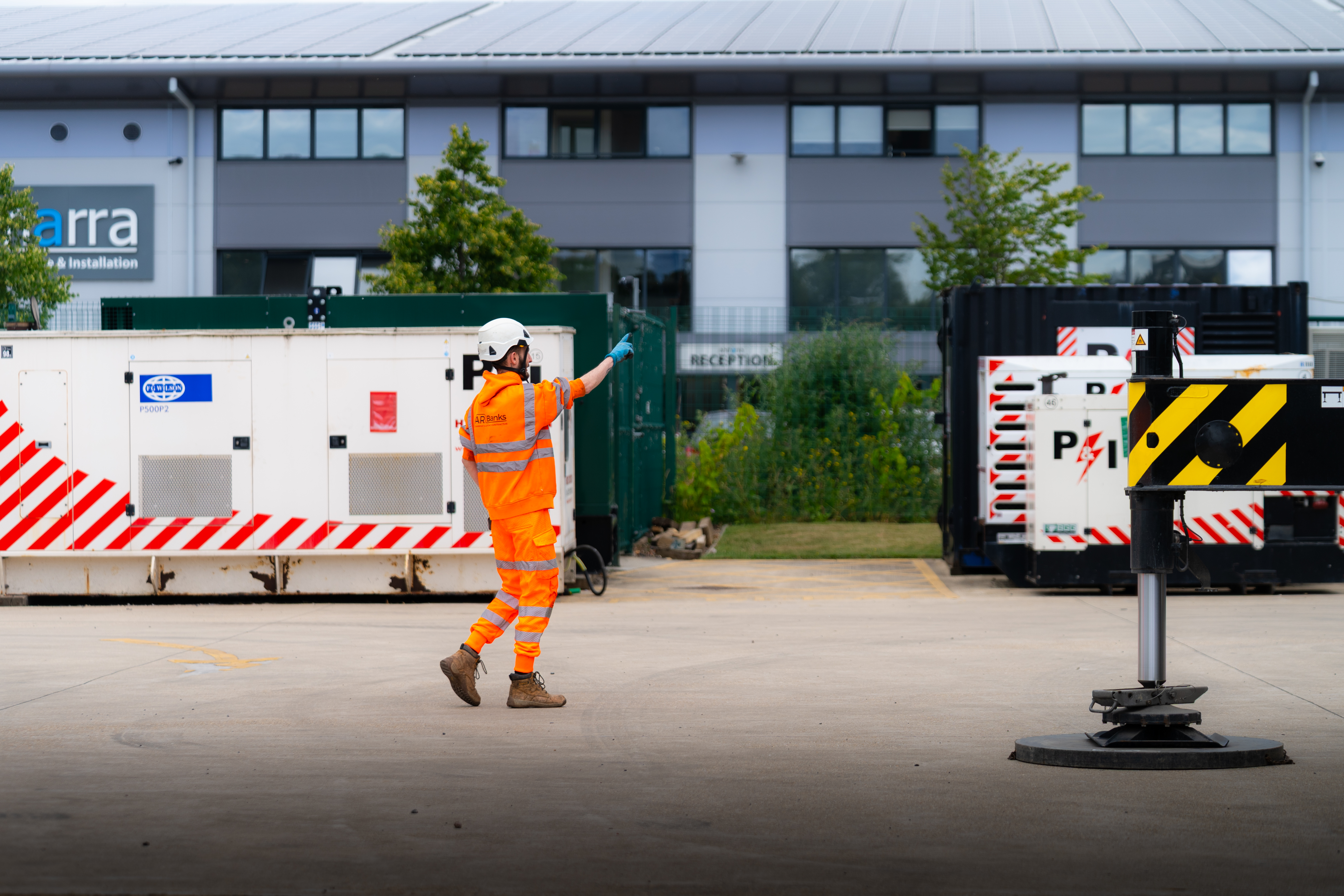
Temporary Power for Planned Shutdowns: A Site-Readiness Checklist
8 October 2026
A planned electrical shutdown should be easier to manage than an emergency outage. The date...
Read more...
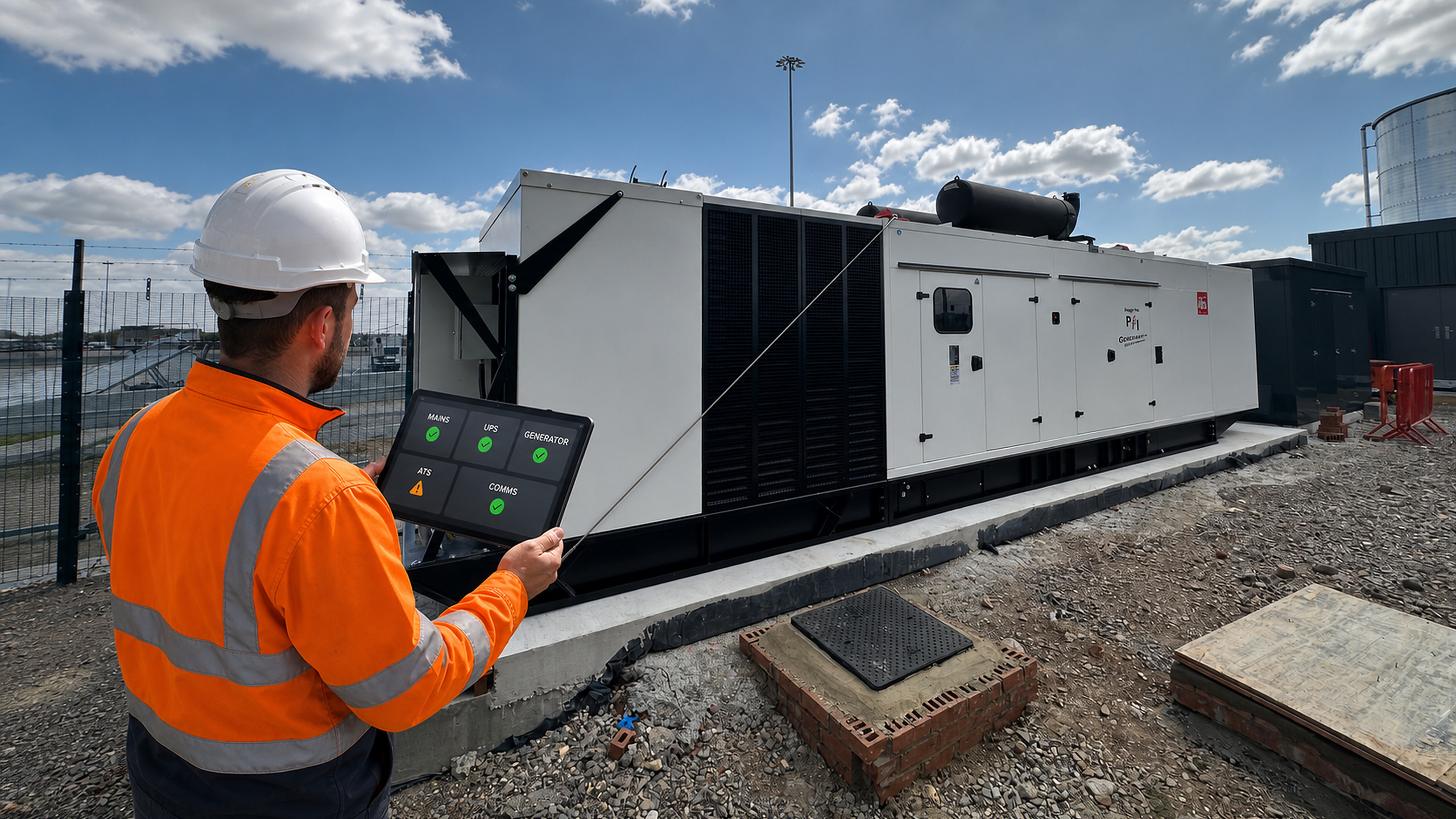
What Signals Should a UPS or Generator Send to a BMS?
2 October 2026
A BMS can show that a generator is running or that a UPS has a...
Read more...
Generator Fuel Autonomy: How Many Hours of Backup Power Does Your Site Need?

25 September 2026
'How many hours will the generator run?' sounds like a simple fuel-tank question. In practice,...
Read more...
How Often Should an Automatic Transfer Switch Be Tested?

18 September 2026
An automatic transfer switch may remain in one position for months, then be expected to...
Read more...
UPS Fan Fault: Causes, Risks and Safe Next Steps

11 September 2026
Fans remove heat from power electronics, filters, transformers and other UPS components. If a fan...
Read more...
View all