

Latest News
Understand the risks behind a UPS fan fault, what to record, how to protect critical load and when to arrange urgent engineer support.

Fans remove heat from power electronics, filters, transformers and other UPS components. If a fan slows, stops or cannot move enough air, internal temperature may rise. The UPS may generate a warning, reduce available capacity, transfer operating mode or shut down to protect itself.
The load may remain powered when the alarm first appears, which can make the event look minor. Treat it as a degradation that needs evidence and timely assessment, especially where the UPS is heavily loaded or the room is warm.
Quick answer: how urgent is a UPS fan fault?
Urgency increases with high or rising temperature, high load, multiple failed fans, loss of fan redundancy, a second cooling or power-module alarm, operation on battery, or a critical load with no alternative path. Smoke, burning smell, abnormal heat or noise requires immediate site emergency action.
What can cause a UPS fan alarm?
- a fan motor or bearing has failed
- the fan is turning too slowly or intermittently
- dust, debris or a blocked filter restricts airflow
- the air inlet or outlet is obstructed
- a fan supply, connector, control board or speed sensor has failed
- the room temperature is outside the permitted range
- another internal fault is creating excess heat
- maintenance panels, filters or airflow parts are incorrectly fitted
Some UPS systems have several fans and can tolerate one failure for a limited period; others have little spare cooling. Use the exact model, event code and manufacturer guidance.
Why the operational risk can grow over time
Heat is not always immediate. Internal temperature may climb as the UPS carries load, charges batteries or experiences a warmer room. A fan alarm at a light overnight load can become more serious when daytime demand rises.
High temperature can shorten component and battery life even before a protective shutdown occurs. The response should consider both immediate continuity and the damage that prolonged hot operation may cause.
What to record
- UPS make, model, serial number and location
- exact alarm text/code and first timestamp
- input, output and bypass state
- load percentage, kW/kVA and battery status
- internal temperatures reported by the UPS
- room temperature and cooling-system alarms
- which fan or module is identified, if shown
- unusual noise, vibration, smell, heat or airflow
- recent filter cleaning, maintenance or room works
- other alarms immediately before and after the fan event
A short video of abnormal sound or a photograph of the display can help an engineer, provided site policy allows it and no panel is opened.
Safe checks from outside the equipment
Facilities staff can usually confirm that room cooling is running, external vents are not blocked, doors and panels are in their normal position and the environment is within the equipment limits. Keep required clearance around the UPS.
Do not insert tools into vents, remove covers, attempt to stop a noisy fan, use compressed air on live equipment or improvise external fans against the cabinet. A UPS can contain hazardous energy even when its input supply is isolated.
Protecting the critical load
Identify what the UPS protects and whether the load has another independent power path. Check current demand and suspend non-essential additions. Confirm the condition of the bypass supply and standby generator, but do not transfer modes casually: bypass may remove power conditioning and can create a single point of failure.
- appoint an incident owner
- monitor temperature and alarm trend at agreed intervals
- prepare the controlled-shutdown sequence
- confirm engineer attendance and parts availability
- consider temporary UPS or alternative supply if repair needs an outage
- set a clear escalation trigger for rising temperature or new alarms
What the engineer may assess
A competent UPS engineer may review fan feedback, event logs, temperatures, load, internal airflow, fan supply and control circuits. The work may require a safe isolation, maintenance bypass or planned load transfer. The method depends on the architecture and site risk.
Replacing the indicated fan without checking airflow and control can miss the root cause. Conversely, a temperature alarm may result from room cooling or blocked filters rather than the fan motor alone.
Can the UPS continue running?
That is a technical and operational risk decision. Relevant factors include manufacturer instructions, number of fans, temperature trend, load, redundancy, alternative paths and the consequence of shutdown. Any temporary continued operation should have active monitoring, a time limit and an owned remedial plan.
Preventing fan and cooling faults
- maintain room temperature and ventilation within specified limits
- keep clearances and external airflow paths unobstructed
- inspect or replace filters to the manufacturer schedule
- include fans, noise, airflow and event logs in planned maintenance
- keep building works and dust controlled around the UPS
- trend repeated temperature warnings rather than treating each as isolated
- plan fan or component replacement where manufacturer lifecycle guidance requires it
Closing the incident
After repair, confirm the correct fan is operating, temperatures remain stable at the expected load and the alarm has cleared for the right reason. Record parts, readings, test method and any limits on the restored system.
If the UPS was transferred, bypassed or partially isolated, verify that the normal resilient configuration has been restored before closing the action.
It may warn, derate, change mode or shut down depending on the design, load and temperature. Check the exact alarm and model guidance.
Some systems have multiple fans, but remaining cooling and permitted operation are model-specific. Continued use should be an informed, monitored decision.
Fan speed can rise with load or temperature, but new grinding, rattling, cycling or vibration should be recorded and assessed.
Only perform external housekeeping allowed by the manufacturer and site procedure. Do not open the UPS or work near hazardous internal energy unless competent and authorised.
High ambient or internal temperature can adversely affect batteries. The alarm may therefore have implications beyond the fan itself.
Bypass changes protection and resilience. It should be planned by people who understand the supply, load and UPS architecture.
Model and serial, exact alarm and time, mode, load, temperatures, environment, other alarms, sound or smell, and recent maintenance history.
Good room conditions, clear airflow, appropriate filter care, planned maintenance and attention to temperature trends reduce risk, although components can still fail.
Act before a cooling warning becomes a shutdown
A fan alarm should lead to a controlled assessment of temperature, load, redundancy and repair options—not an unrecorded reset.
Contact P&I Group for commercial UPS fault response, servicing, parts and resilience planning.
Latest news
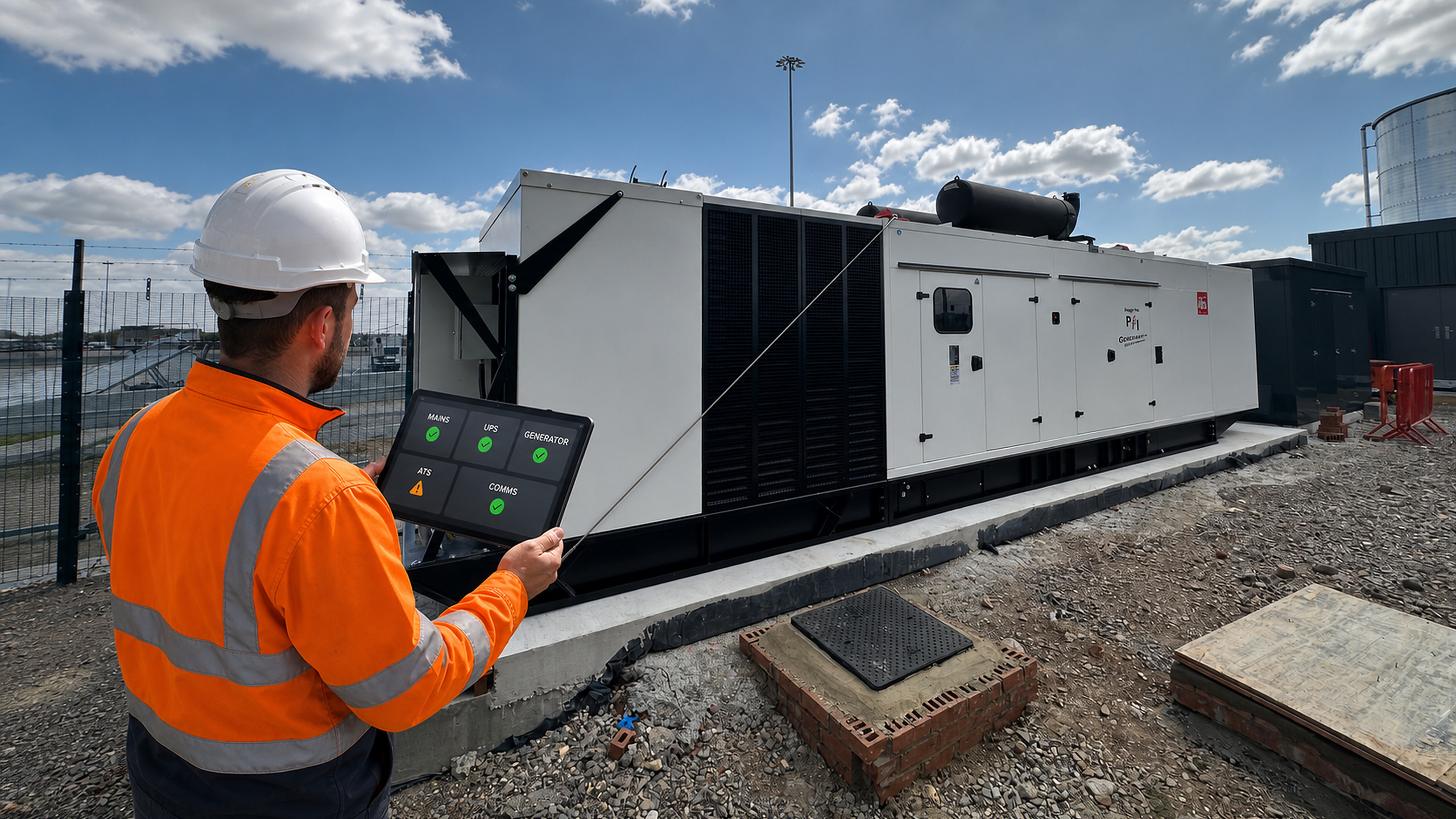
What Signals Should a UPS or Generator Send to a BMS?
2 October 2026
A BMS can show that a generator is running or that a UPS has a...
Read more...
Generator Fuel Autonomy: How Many Hours of Backup Power Does Your Site Need?

25 September 2026
'How many hours will the generator run?' sounds like a simple fuel-tank question. In practice,...
Read more...
How Often Should an Automatic Transfer Switch Be Tested?

18 September 2026
An automatic transfer switch may remain in one position for months, then be expected to...
Read more...
UPS Fan Fault: Causes, Risks and Safe Next Steps
11 September 2026
Fans remove heat from power electronics, filters, transformers and other UPS components. If a fan...
Read more...
Backup Power for Wastewater Pumping Stations During Peak Wet Weather

1 September 2026
A power failure at a wastewater pumping station is difficult at any time. During prolonged...
Read more...
View all