

Latest News
Learn how a UPS protects industrial equipment from power surges, voltage sags and outages, reducing downtime, failures and maintenance costs.

Power fluctuations can strike without warning, disrupting production and damaging costly machinery. Even a brief voltage drop or surge can cause control systems to fail or sensitive electronics to burn out.
Using an uninterruptible power supply (UPS) help protects your industrial equipment by delivering stable power during outages or disturbances.
UPS systems help prevent downtime, reduce maintenance costs and extend the life of your equipment. Industrial-grade systems are built to handle harsh conditions like dust, moisture and temperature changes, keeping your operations steady even when the mains supply is not.
By understanding how power fluctuations affect your systems and how a UPS works to prevent failures, you can make informed decisions about protecting your facility. Here, we'll guide you through how a UPS solution can prevent costly power fluctuations and keep your production running smoothly.
Understanding power fluctuations and their impact on industrial equipment
Stable electrical power keeps your operations efficient and safe. When voltage or frequency shifts occur, you face production losses, reduced system availability and even equipment failure. Managing these fluctuations helps maintain process reliability and customer satisfaction across all industrial segments.
Types of power fluctuations in industrial environments
Power fluctuations appear in several forms, each affecting your facility differently. Common types include voltage sags, surges, transients and frequency variations. These events can result from grid instability, faulty wiring or large motors and industrial machinery starting and stopping.
In industrial plants or distribution centres, even minor changes in voltage can disrupt sensitive automation systems. Understanding power quality issues is vital for preventing costly downtime and ensuring equipment longevity.
Here are the most common types of power fluctuations your electrical equipment is at risk of:
| Type of fluctuation | Description | Common cause | Potential impact |
| Voltage sag | Short drop in voltage | Equipment start-up | Motor stalling |
| Surge | Sudden voltage increase | Lightning, faulty wiring | Component damage |
| Transient | Brief spike or dip | Switching operations | Data loss |
| Frequency variation | Change in power frequency | Grid imbalance | Process instability |
Monitoring these variations allows you to take corrective action before they harm your systems.
The consequences of power loss and voltage drops
Even a brief power loss can halt production lines, damage control systems or corrupt data. In continuous operations like chemical processing plants or offshore oil and gas sites, unplanned shutdowns create safety risks and expensive delays.
Unaddressed power quality issues lead to downtime, and sometimes you might have to replace expensive equipment. These losses directly affect profitability and supply availability.
Voltage drops also reduce motor efficiency and cause overheating in drives and pumps. In water industry applications, this can interrupt treatment processes or damage sensors and telemetry systems. Consistent power quality ensures continuity of process control and supports long-term equipment reliability.
Critical equipment and industrial segments at risk
Certain environments face higher risk from unstable power supply. Medical locations, server rooms and communications rooms and hazardous areas depend on continuous power to protect both people and assets. A sudden outage in these settings can lead to data loss, equipment malfunction or safety incidents. In manufacturing and automation, control systems and PLCs are especially vulnerable.
Across all industrial conditions, protecting critical equipment preserves process reliability. By maintaining stable power, you strengthen system availability and uphold customer satisfaction through consistent operational performance.
How uninterruptible power supplies protect industrial equipment
Reliable power protection keeps your equipment running safely during outages, voltage dips or surges. Choosing the right industrial UPS system, maintaining it properly and integrating it with backup sources like generators ensures stable operation and reduces costly downtime.
How do UPS systems prevent the impact of power fluctuations?
Uninterruptible power supplies use voltage regulation to protect your equipment against power fluctuations. They correct high and low voltages, keeping the power to your equipment consistent.
UPS systems use a form of power conditioning, which essentially cleans and stabilises energy before it reaches your equipment. It acts as the interface to ensure that the power delivered to your electrics is at the right voltage to prevent surges or sags from affecting your equipment.
Key features for industrial applications
Industrial UPS units include features that improve performance, monitoring and safety. Remote monitoring and status indicators such as LED displays or communications cards let you track load, temperature and battery capacity in real time.
A static transfer switch ensures a smooth transition between mains and backup power without interrupting operations. UPS bypass systems allow maintenance or testing without cutting power to your equipment.
Modern industrial‑grade UPS solutions tend to include firmware and control card upgrades, predictive maintenance alerts and battery backup management. These features help you maintain a continual power supply, reduce risk to sensitive electronics, and extend the lifespan of your equipment.
Design, maintenance and compliance considerations
When selecting a UPS, consider design life, battery capacity and compliance with safety standards such as EN 50171 and IEC 60364‑7‑710 specifically for medical providers. These standards ensure safe operation in industrial and healthcare environments.
Follow your UPS manufacturer's operating and maintenance instructions to schedule inspections, perform UPS load bank testing and verify automatic start functions.
The Health and Safety Executive (HSE) guidelines stress the importance of safety switches, emergency shutdown systems and explosion protection measures, especially when installing UPS units in hazardous areas.
Proper UPS maintenance, firmware updates and routine checks increase reliability and reduce the chance of unplanned downtime.
Integrating UPS with other power backup solutions
A UPS works best as part of a complete power backup strategy. Pairing your UPS with diesel generators ensures extended runtime during long outages.
When integrated with standby generators, the UPS provides instant power until the generator reaches full output. Auto start manufacturer settings and controlled shutdown features coordinate both systems to prevent overloads.
This integrated approach ensures your electrical power supplies remain stable, efficient and compliant with industrial safety requirements.
Frequently asked questions
A dependable uninterruptible power supply (UPS) helps you maintain stable operations, protect sensitive equipment and reduce downtime caused by electrical issues. It also supports safe performance in harsh industrial environments by controlling voltage, preventing surges and enabling efficient maintenance.
A UPS provides backup power during outages and voltage dips, keeping your essential machinery running safely without interruption. It also protects control systems and computers from data loss or damage caused by sudden shutdowns. Industrial UPS units ensure consistent performance in demanding environments.
A UPS filters and stabilises the incoming electricity, shielding equipment from voltage spikes and transients. It acts as a buffer between your machines and the mains supply, preventing damage from surges or electrical noise. UPS systems are designed to handle frequent fluctuations and disturbances.
You should assess power capacity, load type and environmental conditions such as temperature and dust. Look for models built for industrial use, with features like remote monitoring and predictive maintenance. The system’s reliability and scalability also matter when supporting large or critical loads, so you may want to consider a modular option.
A quality UPS can protect against most issues, including sags, surges and outages. However, it may not address extreme events such as lightning strikes or long-term grid failures. For full protection, you may need to combine it with surge protection devices or backup generators.
You should perform regular inspections, battery tests, load bank testing and firmware updates. Remote monitoring helps detect early signs of wear or failure so you can act before a problem occurs. Predictive maintenance features, available in advanced UPS systems, reduce downtime and extend equipment life.
By maintaining stable power, a UPS reduces unplanned downtime and minimises production losses. It also protects sensitive electronics, lowering repair costs and extending equipment lifespan. Continuous operation leads to smoother workflows and improved energy management in industrial settings.
A UPS provides immediate, short-term backup power, but it cannot sustain long outages. For longer events, a standby generator is required. The UPS bridges the gap while the generator starts and reaches stable output.
Most industrial UPS batteries last 3–5 years, depending on temperature, load and maintenance. Regular testing and correct battery selection help extend operational life.
Latest news
Temporary Power for Planned Shutdowns: A Site-Readiness Checklist

8 October 2026
A planned electrical shutdown should be easier to manage than an emergency outage. The date...
Read more...
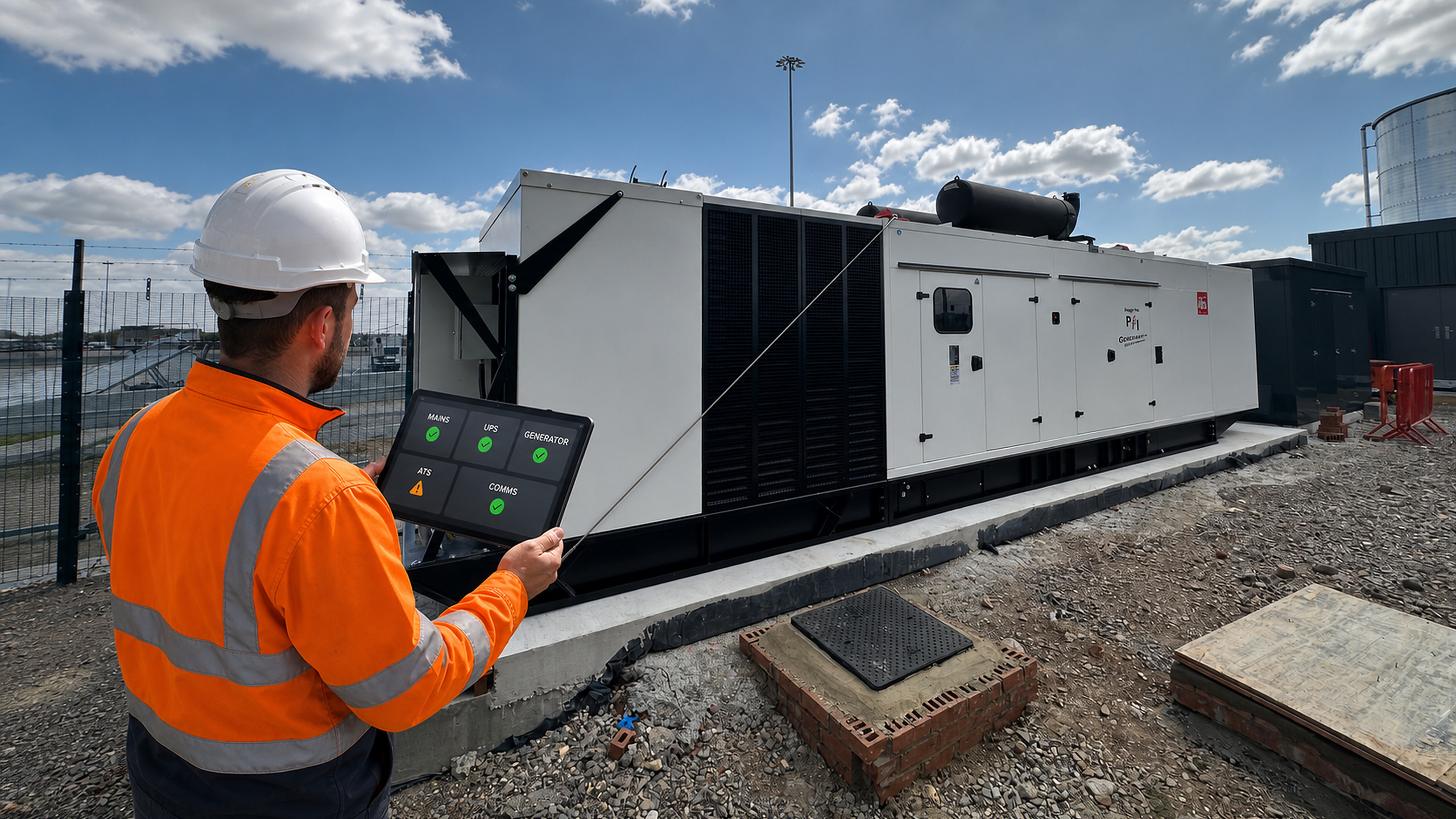
What Signals Should a UPS or Generator Send to a BMS?
2 October 2026
A BMS can show that a generator is running or that a UPS has a...
Read more...
Generator Fuel Autonomy: How Many Hours of Backup Power Does Your Site Need?

25 September 2026
'How many hours will the generator run?' sounds like a simple fuel-tank question. In practice,...
Read more...
How Often Should an Automatic Transfer Switch Be Tested?

18 September 2026
An automatic transfer switch may remain in one position for months, then be expected to...
Read more...
UPS Fan Fault: Causes, Risks and Safe Next Steps

11 September 2026
Fans remove heat from power electronics, filters, transformers and other UPS components. If a fan...
Read more...
View all