

Latest News
Choosing the right generator is a balance between your equipment’s running and starting power needs. Learn how to size your generator with P & I Group.

Backup generators are essential to keep your business running during power outages. Choosing the right size is important – too small and you won't be able to power your critical equipment, but a generator that's too large for your requirements can lead to unnecessary fuel use, higher running costs and avoidable wear.
Choosing the right generator is a careful balance between your equipment’s running and starting power needs. You need a generator that can handle your total load without wasting fuel or risking overload, voltage dips or equipment damage.
Understanding how much power you need starts with understanding what your business depends on most. From computers and lighting to medical equipment and machinery, each piece of equipment contributes to your overall demand and affects how the generator is sized. A clear grasp of generator sizing helps you plan for both everyday use and unexpected surges.
In this generator sizing guide, we'll show you how to calculate your power requirements, follow a simple sizing process and avoid common mistakes that lead to costly downtime. Then, you’ll know exactly what to look for when choosing a generator that fits your business needs safely and efficiently.
Understanding generator sizing and power requirements
Selecting the correct generator size ensures efficient power delivery, protects equipment from electrical stress and prevents costly downtime. You need to match your generator’s output capacity to your actual energy demands, considering both continuous and peak loads to maintain reliable performance during a power outage or daily use.
Key considerations in generator sizing
Generator sizing involves matching your power requirements to the generator’s rated capacity. The capacity is measured in kilowatts (kW), showing how much electrical power it can produce. Understanding these ratings helps you avoid overloads and underperformance.
You should also consider the apparent power (kVA) rating, which accounts for both real and reactive power and is often the primary rating used in commercial generator selection. This helps align the generator’s electrical output with your equipment’s load characteristics.
Wattage calculation and load analysis
Accurate wattage calculation begins with listing every device you plan to power. Each appliance, from air conditioners to servers, has a label showing its watt requirements. Add up the running watts for all devices and identify those with high starting watts, such as electric motors or compressors.
For example:
| Equipment | Running kW | Starting kW |
| Air conditioning unit | 3.5 | 4.5 |
| Security system | 0.5 | 0.5 |
| Desktop PCs with monitor | 0.8 | 0.8 |
Your generator must handle both total running load and the highest starting load at once to avoid tripping breakers, brownouts or unstable voltage. A detailed load analysis ensures that essential circuits, such as medical equipment or emergency lighting, receive stable power during outages.
Generator fuel and performance
Proper sizing extends equipment lifespan and reduces fuel consumption. Choosing between diesel, petrol or hybrid models also affects maintenance schedules, fuel efficiency, site emissions and noise levels. Diesel generators are the preferred choice for most businesses, thanks to their durability, longevity and lowered carbon output compared to petrol alternatives.
Performance charts supplied by manufacturers help you compare generator classes by power output, efficiency and rated hours of operation. Always ensure your chosen model complies with local emission and safety standards.
Power factor and load management
Power factor measures how efficiently electrical power is converted into useful work. Most business equipment operates at a power factor of between 0.8 and 1.0. A low PF means wasted energy and higher operational costs. To size your generator correctly, multiply total kW by the PF to find the required kVA.
Effective load management helps prevent overloads and ensures consistent operation and reduces strain on both the generator and downstream electrical equipment. You can achieve this by sequencing high-demand equipment like computers, communications systems and servers to avoid simultaneous peaks.
Advanced controllers allow real-time measurement of load changes, helping you balance circuits and optimise energy use.
The sizing process: step-by-step guide for businesses
Determining the correct generator capacity requires careful load sizing, accurate calculations and considerations for your business' future. You need to review your equipment, measure total power demand and consider both operational and expansion needs to ensure your generator performs efficiently and safely.
Creating an appliance and equipment list
Start by listing every appliance, machine and system that will connect to your generator, including often-overlooked loads such as security systems, pumps, CCTV, access control and network equipment. Include lighting, computers, HVAC units and industrial machinery. This list forms the foundation of your load-sizing process. If you already have an asset or equipment inventory, use it as your starting point and add the running and starting wattage values for each item.
Record each item’s running watts and starting watts from its data plate or manual. If this information is missing, your certified electrician can measure it using a power meter. Group equipment by priority – essential, important, and non-essential. This helps you plan for load management during outages.
Using sizing calculators and tools
A generator size calculator can simplify the estimation process. These tools help you translate your equipment list into a recommended generator capacity, usually expressed in kVA or kW.
When using a sizing calculator, enter your equipment's accurate wattage values and select equipment types that match your setup. Some calculators also allow you to adjust for power factor, giving a more precise result.
If you prefer professional support, your generator provider and installer can assist with customised sizing. They often include a site inspection to check your circuit breaker panel, site access and installation location before recommending a model.
Accounting for starting and running loads
Equipment such as motors and compressors draw higher current when starting. You must account for both starting load (surge watts) and running load (continuous watts) to prevent overloads.
A practical rule is to multiply the running watts of motor-driven equipment by two to estimate its starting demand. Undersizing your generator can cause tripped breakers and equipment damage. Oversizing, meanwhile, wastes fuel and increases installation cost. A balanced approach ensures steady operation and longer generator life.
During planning, check that your circuit breaker panel can handle the total load. A certified electrician like P&I Group's qualified experts can verify load distribution and ensure compliance with local electrical standards.
Futureroofing your generator choice
Your power needs may grow as your business expands, especially if you introduce new machinery, HVAC systems, EV chargers or building extensions. When selecting a generator, allow a 20–25% capacity margin for future equipment or building changes.
Consider factors such as site access, installation location and whether your generator will need stabiliser legs or a concrete pad for support. These details affect both installation and long-term maintenance.
Your installation partner will assess environmental conditions like ventilation and weather exposure. A professional site evaluation can identify potential issues before installation.
Review consumer reports and manufacturer specifications to compare reliability and fuel efficiency. Investing in a slightly larger, high-quality generator now can reduce upgrade costs later and ensure consistent performance as your power demands evolve.
Frequently asked questions
Choosing the correct generator size helps ensure your business runs smoothly during power interruptions. You’ll need to think about your total energy demand, type of power supply and how usage patterns affect performance and cost.
What factors should be considered when determining the size of a generator for a business?
You should look at your total load, including lighting, HVAC systems, computers, servers, medical equipment and machinery. Consider both running and starting wattage, as some equipment uses more power when starting up.
Environmental factors such as temperature, humidity and altitude can also affect generator performance. You should include a safety margin of about 20–25% to handle future growth or unexpected surges.
How can I calculate the total wattage required for my business?
List every device and appliance that will connect to the generator. Find the wattage for each, usually printed on the label or in the manual. Add all the running kW together, then include the highest starting wattage.
You can also use a generator wattage calculator to simplify the process. Many calculators allow you to input each device’s wattage and will estimate the generator capacity needed.
Can the size of a generator affect its efficiency and longevity?
Yes. A generator that’s too small will run at full load often, causing wear and possible overheating. It may also not generate enough power to run your mission-critical systems. A generator that’s too large may operate below its optimal capacity, wasting fuel and increasing maintenance costs.
Choosing the right size helps maintain efficiency, reduces fuel consumption and extends the generator’s service life.
How does peak business usage influence generator sizing requirements?
Peak usage refers to times when your business uses the most power, such as during production or heavy equipment operation. You should size your generator to handle these peaks without overloading.
Including a buffer for these high-demand periods ensures consistent performance and prevents system strain.
What are the implications of under-sizing or over-sizing a generator for business use?
An under-sized generator may fail to power all equipment, leading to downtime or damage to sensitive electronics. Over-sizing can result in unnecessary fuel costs and reduced efficiency.
Proper sizing balances performance and cost, ensuring your generator can handle both current and future business demands without waste.
What’s the difference between kW and kVA when sizing a generator?
kW (kilowatts) represents real usable power. kVA (kilovolt-amperes) includes real power plus reactive power. To size a generator correctly, divide kW by the power factor (usually 0.8 for commercial sites). This gives you the kVA rating required for your generator.
Latest news
Temporary Power for Planned Shutdowns: A Site-Readiness Checklist
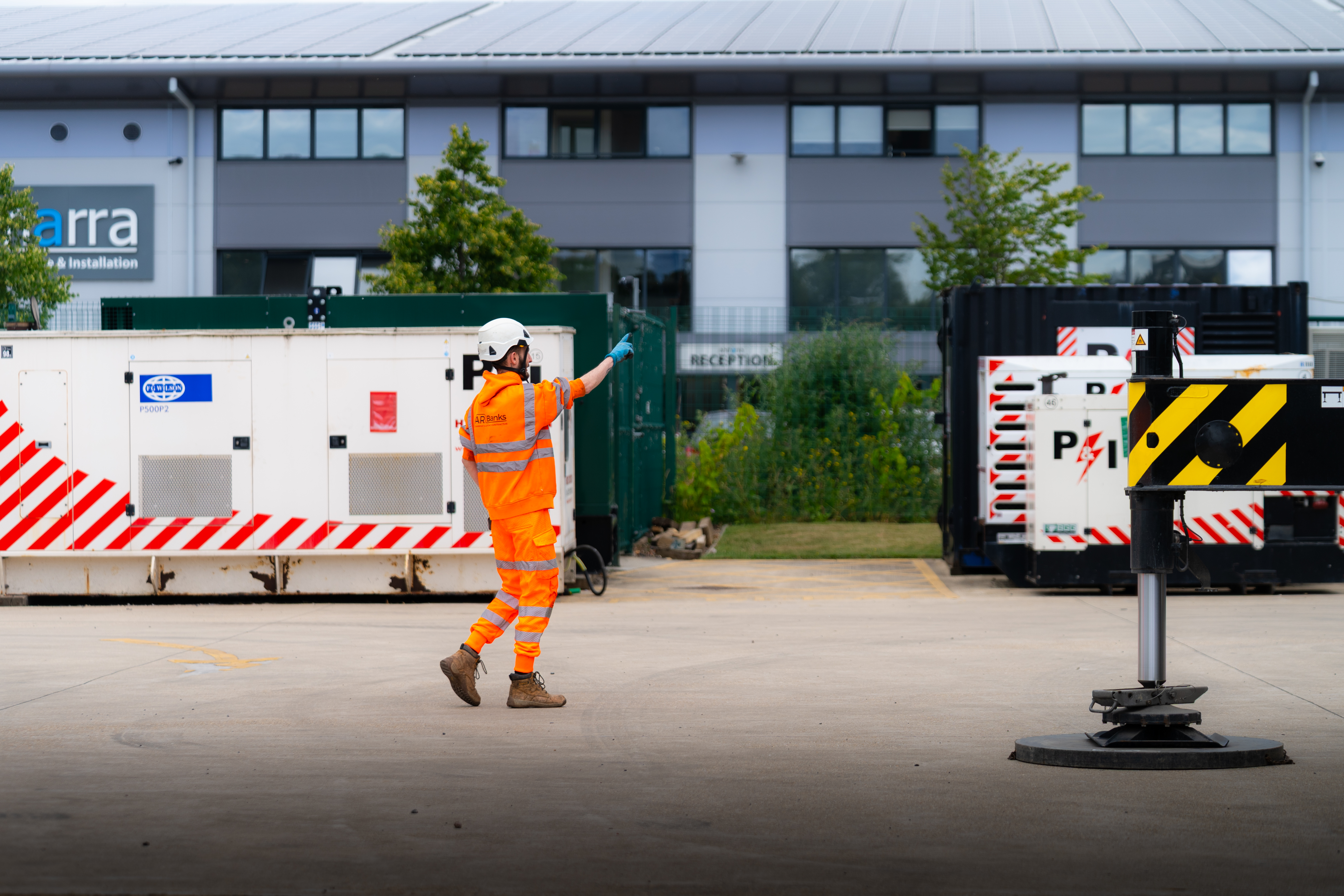
8 October 2026
A planned electrical shutdown should be easier to manage than an emergency outage. The date...
Read more...
What Signals Should a UPS or Generator Send to a BMS?
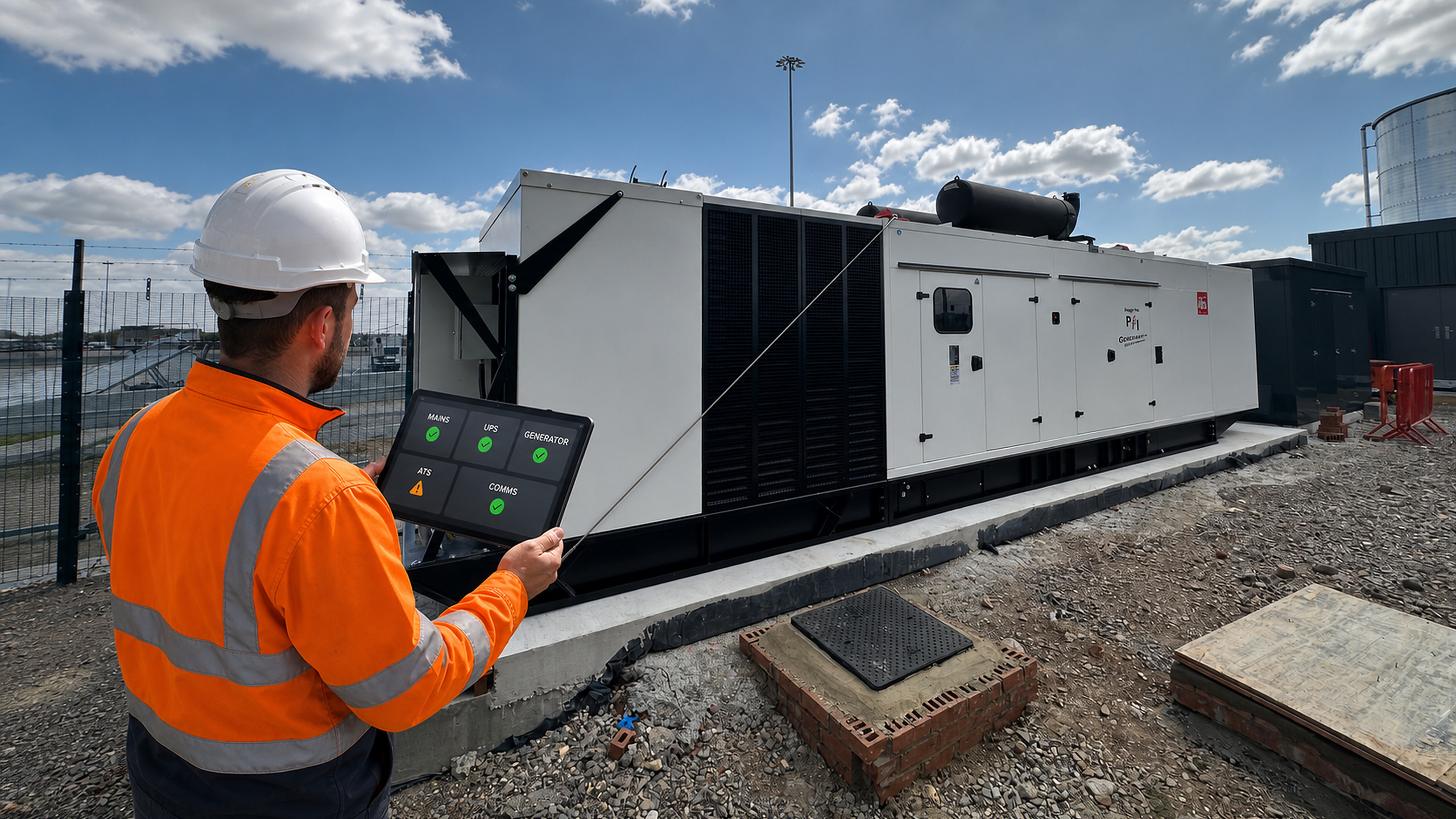
2 October 2026
A BMS can show that a generator is running or that a UPS has a...
Read more...
Generator Fuel Autonomy: How Many Hours of Backup Power Does Your Site Need?

25 September 2026
'How many hours will the generator run?' sounds like a simple fuel-tank question. In practice,...
Read more...
How Often Should an Automatic Transfer Switch Be Tested?

18 September 2026
An automatic transfer switch may remain in one position for months, then be expected to...
Read more...
UPS Fan Fault: Causes, Risks and Safe Next Steps

11 September 2026
Fans remove heat from power electronics, filters, transformers and other UPS components. If a fan...
Read more...
View all