

Latest News
Discover how to choose the right UPS system for your business needs, ensuring uninterrupted power & protecting critical operations. We share our essential tips.

Having access to consistent power is not just a convenience but a critical necessity for most businesses, and so the importance of an Uninterruptible Power Supply (UPS) cannot be overstated. Whether it’s safeguarding data in IT infrastructures, ensuring uninterrupted operations in healthcare facilities, or maintaining essential services in various industries, a UPS system ensures continued power.
However, harnessing the full potential of a UPS requires choosing the right system for the specific needs of the business and the location. In this post, we’re looking at the essentials of choosing a UPS, examining the critical factors that should influence your choice.

Navigating the UPS Landscape: Understanding the Essentials
A UPS is a device that provides emergency power to a load when the input power source (usually the main power) fails. Its primary function is to bridge the gap between a power outage and the activation of a secondary power source, like a generator, or to allow for safe, orderly shutdown of equipment.
There are three main types of UPS systems, each suited to different needs and applications.
- The Standby UPS, the simplest form, offers basic power protection and is often used in home offices or smaller businesses.
- The Line-Interactive UPS, a step above in complexity and protection, regulates voltage fluctuations and is commonly seen in server rooms and networking environments.
- The Double-Conversion (or Online) UPS provides comprehensive power protection and is used in critical applications like data centres and medical facilities.
The role of UPS systems in critical power infrastructure is indispensable, protecting against data loss and equipment damage in the event of power fluctuations. They also ensure continuity in operations - which is crucial in life-saving situations in hospitals or mission-critical processes in financial institutions.
Key Considerations for Optimal Power Backup: Choosing the Right UPS
Selecting the right UPS is a critical decision that requires careful consideration of several factors to ensure your power backup system is efficient, reliable, and tailored to your needs.
Power Requirements and Capacity: You’ll need to calculate the total power load of all the devices you intend to support with the UPS. Select a UPS with a capacity (measured in VA, or Volt-Amps) that exceeds your total power load, allowing for future expansion, and remember that overloading a UPS can lead to power failures, negating the very purpose of having a UPS.
Runtime Requirements: Runtime, or the duration the UPS can keep your systems running during a power outage, is another critical factor. This duration can vary from a few minutes, just enough time to safely shut down equipment, to several hours for critical operations. The runtime is determined by the battery capacity of the UPS and the total power load of the connected equipment.
Scalability and Flexibility: As your business grows, so will your power needs. A scalable UPS system can adapt to increasing demands without the need for a complete overhaul. Modular UPS systems can allow you to add more capacity or batteries as required. Flexibility in terms of connectivity and integration with existing power management systems is also essential.
Reliability and Quality: Look for brands and models with a proven track record of performance and durability. Consider the UPS’s efficiency ratings and how they impact energy consumption and operational costs.
Additional Factors to Consider for Critical Power
Beyond the primary considerations of capacity, runtime, and reliability, there are additional factors that play a crucial role in choosing the right UPS system for your needs.
The longevity and efficiency of a UPS system greatly depends on regular maintenance and servicing. Having dedicated service support, will ensure that your UPS system remains in optimal condition throughout its lifecycle.
The operating environment of the UPS also influences your choice. Factors like temperature, humidity, and dust can affect the performance and lifespan of a UPS. Consider a UPS with environmental tolerance suited to your specific setting, especially if the equipment will be placed in harsh or unusual conditions.
While cost is an important factor, it's crucial to balance initial expenses with long-term operational costs. Investing in a more expensive, high-quality UPS can lead to lower total cost of ownership due to higher efficiency, fewer maintenance requirements, and greater reliability.
Our Final Thoughts
Choosing the right UPS is a decision that goes beyond the required technical specifications. It is about ensuring uninterrupted operations, protecting critical equipment, and securing peace of mind in the face of power uncertainties. Remember, the right UPS solution is one that not only meets your immediate power backup needs but also aligns with your long-term operational goals.
We can assist you in choosing the right UPS for your business, as well as supporting you with regular maintenance and servicing. Reach out to our team of experts for tailored advice and solutions that ensure your power is always protected, even in the toughest of environments. Ultimately, selecting the right UPS is not just about choosing a product; it's about having the best solution for your critical power needs. Get in touch to discuss your needs today.
Latest news
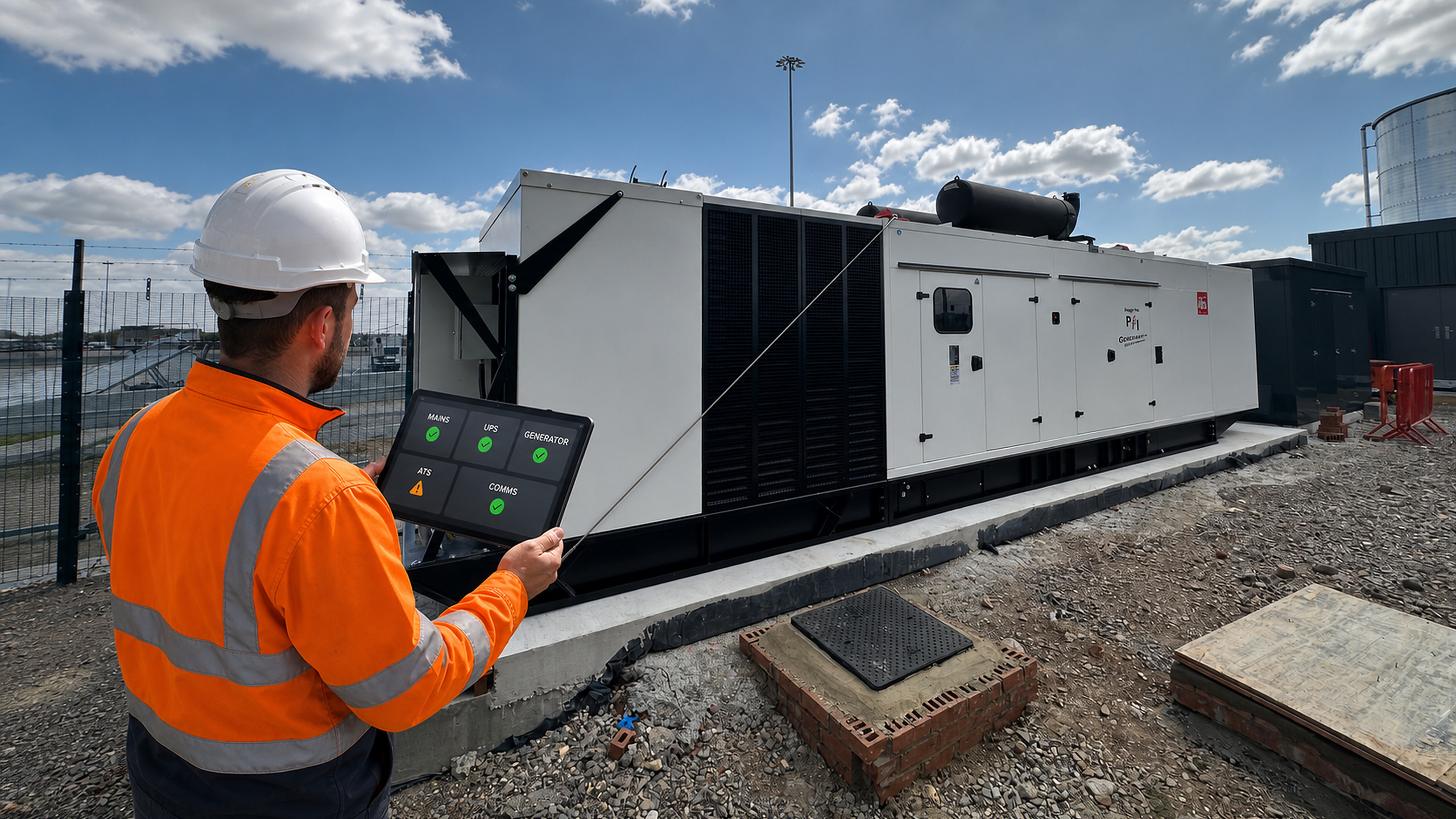
What Signals Should a UPS or Generator Send to a BMS?
2 October 2026
A BMS can show that a generator is running or that a UPS has a...
Read more...
Generator Fuel Autonomy: How Many Hours of Backup Power Does Your Site Need?

25 September 2026
'How many hours will the generator run?' sounds like a simple fuel-tank question. In practice,...
Read more...
How Often Should an Automatic Transfer Switch Be Tested?

18 September 2026
An automatic transfer switch may remain in one position for months, then be expected to...
Read more...
UPS Fan Fault: Causes, Risks and Safe Next Steps

11 September 2026
Fans remove heat from power electronics, filters, transformers and other UPS components. If a fan...
Read more...
Backup Power for Wastewater Pumping Stations During Peak Wet Weather

1 September 2026
A power failure at a wastewater pumping station is difficult at any time. During prolonged...
Read more...
View all