

Latest News
A practical multi-site backup power checklist for facilities managers, covering generators, UPS systems, fuel, batteries, maintenance records, SLAs and emergency response.

Facilities managers are often responsible for keeping multiple sites operational, safe and compliant.
That can include offices, healthcare buildings, industrial facilities, retail sites, public sector buildings, data rooms, warehouses, laboratories, education sites and critical infrastructure assets. Each site may have different risks, different equipment and different levels of dependence on backup power.
The challenge is visibility.
One site may have a well-maintained standby generator. Another may have ageing UPS batteries. Another may have unclear fuel records, missing test reports or no obvious emergency contact process. Across a multi-site estate, these gaps can be easy to miss until a power cut exposes them.
A practical backup power checklist helps facilities teams understand where risk sits across the estate. It turns individual assets into a managed resilience plan.
This guide explains what facilities managers, FM providers, estates teams and regional operations managers should review across multi-site backup power systems, including generators, UPS systems, fuel, batteries, maintenance records, access notes, SLAs and emergency response.
Quick answer: what should facilities managers check across backup power systems?
Facilities managers should keep a clear record of every generator, UPS system, ATS, battery set, fuel tank and critical power asset across their estate. Each site should be reviewed for asset condition, critical loads, fuel quality, battery age, maintenance records, test history, access arrangements, emergency contacts, SLAs and temporary power contingency.
The aim is simple: know what equipment exists, what it protects, what condition it is in and who responds if it fails.
Why backup power management matters for facilities teams
Power disruption can affect more than lighting and sockets.
Depending on the site, a power failure may affect IT systems, security, access control, lifts, pumps, refrigeration, communications, building management systems, production equipment, clinical environments or life-safety systems.
For a facilities manager, the issue is not only whether a generator or UPS exists. The real question is:
Do we know which systems are protected, what condition the equipment is in and who responds if something fails?
That is especially important across multi-site estates. Risk can vary significantly from one building to another.
A city-centre office, a healthcare site, a remote utility asset and a manufacturing facility may all sit within the same estate, but they will not have the same backup power requirements.
A good checklist helps facilities teams prioritise action based on risk, not assumptions.
Start with a backup power asset register
The first step is to know what you have.
A multi-site backup power asset register should record every generator, UPS, battery set, ATS, fuel tank and related critical power asset across the estate.
At minimum, it should include:
| Asset information | Why it matters |
|---|---|
| Site name and address | Identifies where the asset is located |
| Asset type | Generator, UPS, ATS, fuel tank, battery cabinet or control panel |
| Make and model | Helps with servicing, parts and support |
| Capacity/rating | Confirms what the asset is designed to support |
| Installation date | Supports lifecycle planning |
| Last service date | Shows whether maintenance is up to date |
| Next service due | Helps prevent missed visits |
| Condition status | Supports risk prioritisation |
| Critical loads protected | Shows what depends on the asset |
| Emergency contact | Speeds up response during an incident |
| Service provider | Confirms who is responsible for support |
Without a clear asset register, facilities teams can end up managing backup power reactively. With one, they can compare sites, identify gaps and plan generator maintenance, UPS maintenance and replacement work more effectively.
Grade each site by criticality
Not every site carries the same level of risk.
A generator fault at a low-occupancy office may create inconvenience. A generator fault at a healthcare building, water site, data room or production facility may create a much greater operational impact.
Facilities teams should grade sites by criticality so time and budget can be focused where risk is highest.
| Criticality level | Description | Example |
|---|---|---|
| High | Power loss could affect safety, compliance, critical operations or public service | Healthcare site, data centre, utility site, production facility |
| Medium | Power loss would disrupt operations but may be manageable for a limited period | Office, warehouse, education building, regional hub |
| Low | Power loss would cause inconvenience but limited operational risk | Small office or low-dependency site |
This does not replace a detailed risk assessment, but it gives FM teams a clear starting point.
Once criticality is defined, you can decide which sites need more frequent servicing, load bank testing, fuel checks, UPS battery testing, remote monitoring or emergency response cover.
Check generator status at every site
For sites with standby generators, the checklist should go beyond “generator present”.
A generator may be installed, but that does not mean it is ready.
Facilities teams should review:
| Generator check | Why it matters |
|---|---|
| Last service date | Confirms whether maintenance is current |
| Last run test | Shows whether the generator is being exercised |
| Last load bank test | Helps prove performance under demand |
| Battery condition | Reduces risk of start failure |
| Fuel level | Confirms available runtime |
| Fuel quality | Reduces risk of contamination-related failure |
| Alarm history | Highlights recurring faults |
| Control panel condition | Confirms visibility and operation |
| Engine condition | Identifies leaks, wear or deterioration |
| Cooling system | Reduces risk of overheating |
| Exhaust and ventilation | Supports safe operation |
| Access for servicing | Ensures engineers can maintain the asset |
| Emergency response cover | Confirms support if the generator fails |
The key is to understand the generator’s readiness, not just its existence.
If a generator has not been serviced, tested under load or reviewed after site changes, the estate may be carrying hidden risk. Our generator maintenance checklist gives a useful starting point for routine checks, while our generator load bank testing guide explains why testing under demand matters.
Check UPS systems and battery health
UPS systems are often spread across multi-site estates in comms rooms, server rooms, plant rooms, security areas and control spaces.
Because UPS systems are usually quiet and unobtrusive, they can be easy to overlook until an alarm sounds or runtime is lost.
A multi-site UPS checklist should include:
| UPS check | Why it matters |
|---|---|
| UPS make, model and rating | Supports maintenance and replacement planning |
| Protected load | Confirms what depends on the UPS |
| Current load percentage | Shows available capacity |
| Required runtime | Confirms how long the UPS needs to support the load |
| Battery age | Supports replacement planning |
| Battery test results | Identifies weakening batteries |
| Alarm history | Highlights recurring or unresolved issues |
| Bypass arrangements | Supports maintenance and fault planning |
| Room temperature | Heat can shorten battery life |
| Last maintenance visit | Confirms service status |
| Firmware/software status | Supports monitoring and reliability |
| Replacement date forecast | Helps plan budget and reduce emergency replacement |
UPS battery condition is particularly important. Batteries degrade over time, and actual runtime can reduce without obvious visible signs.
For FM teams, it is useful to track battery age and replacement dates across the estate. This prevents batteries from being replaced reactively, one site at a time, after alarms or failures occur. For more context, see our guide to what a UPS maintenance contract should include.
Review fuel condition and runtime
Fuel is often one of the biggest hidden risks in standby generator systems.
A generator may be well-maintained, but if the stored diesel is contaminated or degraded, reliability can still be compromised.
For each generator site, facilities teams should record:
- fuel tank capacity
- current fuel level
- expected runtime
- last fuel sample date
- last fuel polishing date, where applicable
- water or contamination history
- tank condition
- refuelling access
- fuel supplier details
- emergency refuelling process
- any fuel theft or security risks
This is especially important for sites where generators are rarely used. Stored diesel can degrade over time, and water, sediment or microbial contamination can lead to blocked filters, poor combustion, starting issues or generator failure.
The practical question is:
If this generator needed to run for several hours, do we know the fuel is fit for use and the tank can support the required runtime?
A full tank is useful. A clean, tested and managed fuel supply is better. P&I Group supports this through fluid testing, fuel polishing and generator refuelling.
Check ATS and changeover arrangements
A generator may be ready, but the site still needs a reliable way to transfer power.
That is where the automatic transfer switch, or ATS, becomes important. The ATS detects mains failure and transfers the load to standby power. On some sites, a manual changeover arrangement may be used instead.
For each site, record:
| Changeover check | Why it matters |
|---|---|
| ATS or manual changeover type | Confirms how the site transfers to backup power |
| Last ATS test date | Shows whether operation has been proven |
| Generator start signal | Confirms the generator receives the correct command |
| Transfer timing | Important for critical loads |
| Return-to-mains process | Confirms safe restoration |
| Control panel alarms | Highlights faults or warnings |
| Manual override process | Supports emergency operation |
| Responsible person | Confirms who understands the process |
| Test records | Provides evidence for maintenance and audits |
For unmanned or remote sites, automatic changeover can be particularly important. If the site depends on manual intervention, response time and access arrangements need to be clearly understood. For more detail, see our guide: What Is an Automatic Transfer Switch?
Record access notes for each site
Access is often overlooked until there is an emergency.
For multi-site estates, engineers may need to respond to unfamiliar locations, sometimes out of hours or during poor weather. If access information is incomplete, response can be delayed.
Each site record should include:
- site access address
- gate codes or access arrangements
- keyholder details
- out-of-hours contacts
- parking instructions
- generator location
- UPS location
- plant room access notes
- fuel tank location
- any permit requirements
- security requirements
- known access restrictions
- delivery and refuelling route
- photos of key assets, where helpful
This is especially useful for FM providers managing sites on behalf of clients. The person arranging the call-out may not be the person who knows the site best.
Good access notes reduce friction during a fault and support faster response from internal teams, service partners and emergency power specialists.
Maintenance dates and test records
A multi-site backup power plan should make maintenance status easy to see.
Facilities teams should be able to answer:
- Which generators are overdue for service?
- Which UPS systems have ageing batteries?
- Which sites have not had fuel testing?
- Which generators have not been load tested?
- Which ATS units have not been tested?
- Which recommendations are still open?
- Which sites have repeated faults?
- Which assets need replacement planning?
A simple RAG status can help:
| Status | Meaning |
|---|---|
| Green | Asset is maintained, tested and records are current |
| Amber | Asset is operational but has upcoming risks or recommendations |
| Red | Asset has overdue maintenance, unresolved faults or significant risk |
This gives regional facilities managers and operations teams a quick view of estate-wide risk.
It also helps support budget planning. Instead of reacting to failures, teams can prioritise maintenance, replacement and remedial works based on evidence. Where generators are ageing or becoming unreliable, our guide on repairing or replacing a commercial generator may also be useful.
Emergency contacts, SLAs and escalation process
A backup power checklist should not only record equipment. It should record what happens when something goes wrong.
Every site should have a clear emergency response process.
| Emergency information | Why it matters |
|---|---|
| Primary emergency contact | Ensures the right person is notified |
| Site keyholder | Allows access during out-of-hours response |
| Generator/UPS service provider | Confirms who should be called |
| Agreed response time | Sets expectations during a fault |
| SLA details | Confirms level of support |
| Temporary generator hire process | Provides contingency if equipment fails |
| Fuel supplier contact | Supports extended runtime |
| Internal escalation route | Helps decision-making during incidents |
| Client or landlord contact | Useful for FM-managed sites |
| Out-of-hours procedure | Reduces delay outside normal working hours |
The escalation process should be simple enough to follow under pressure.
A complex plan that only one person understands is not resilient. For wider planning, see our guide to creating an emergency power plan.
Spares and replacement planning
For critical sites, spare parts and lifecycle planning matter.
Facilities teams should understand whether key components are readily available, especially for older generators, UPS systems and control panels.
Important questions include:
- Are generator filters, belts and service parts readily available?
- Are starting batteries approaching replacement?
- Are UPS batteries due for replacement?
- Are UPS fans, capacitors or control cards ageing?
- Is the ATS serviceable?
- Are replacement parts still supported by the manufacturer?
- Are there obsolete control systems?
- Is the generator nearing end of life?
- Is a replacement plan needed?
This is particularly important across large estates where assets may have been installed at different times by different contractors.
A multi-site review can help identify where older equipment is creating risk and where capital planning may be needed. If control equipment is becoming unreliable, it may also be worth reviewing control systems and changeover arrangements as part of the wider estate plan.
Remote monitoring and visibility
Remote monitoring can be valuable for multi-site estates because it gives facilities teams better visibility of assets that may not be visited regularly.
Generator remote monitoring can help track:
- generator status
- alarms
- battery condition
- fuel levels
- run hours
- fault codes
- start failures
- maintenance indicators
UPS monitoring may provide visibility of:
- load level
- battery status
- runtime
- alarms
- temperature
- bypass status
- event history
Remote monitoring does not replace planned maintenance, but it can help identify issues earlier and support faster response.
For FM providers and regional operations managers, this can be especially useful where one team is responsible for multiple sites across a wide area.
A practical multi-site backup power checklist
The table below gives facilities teams a simple framework to review each site.
| Checklist area | What to record |
|---|---|
| Site details | Address, contacts, access notes, site criticality |
| Critical loads | Systems that must remain operational |
| Generator status | Rating, condition, service date, test records |
| UPS status | Rating, load, battery age, runtime, alarms |
| ATS/changeover | Type, last test, transfer process, responsible person |
| Fuel | Tank capacity, fuel level, fuel quality, refuelling plan |
| Batteries | Generator batteries, UPS batteries, test dates, replacement dates |
| Maintenance | Last service, next service, open recommendations |
| Test records | Run tests, load bank tests, ATS tests, UPS tests |
| Emergency response | Contacts, SLAs, escalation, temporary power process |
| Access | Keys, codes, plant room location, refuelling access |
| Spares/lifecycle | Parts availability, age, replacement planning |
| Monitoring | Remote monitoring, alarms, reporting process |
| Risk status | Green, amber or red estate-wide view |
This can be used as the foundation for a simple estate-wide backup power register.
Common multi-site backup power mistakes
Across multi-site estates, backup power risk often comes from inconsistent records and unclear ownership.
| Mistake | Why it creates risk |
|---|---|
| No central asset register | Teams may not know what equipment exists |
| Treating all sites the same | Critical sites may not receive enough attention |
| Missing battery replacement dates | UPS or generator batteries may fail unexpectedly |
| Poor fuel records | Contamination or low fuel may go unnoticed |
| No load testing history | Generators may not be proven under demand |
| Untested ATS units | Transfer to backup power may fail |
| No clear emergency contacts | Response may be delayed |
| Access notes missing | Engineers may lose time reaching equipment |
| Open recommendations not tracked | Known issues may remain unresolved |
| No estate-wide risk view | Budget and maintenance priorities become reactive |
The solution is not always more equipment. Often, the first step is better visibility.
How often should facilities teams review backup power?
Backup power should be reviewed regularly, not only after a failure.
| Review frequency | What to check |
|---|---|
| Monthly | Alarm history, fuel levels, remote monitoring alerts, access changes |
| Quarterly | Service status, open recommendations, upcoming battery replacements |
| Six-monthly | Critical site risk review, fuel condition, ATS test status |
| Annually | Full estate-wide backup power review, asset register, lifecycle plan |
| After site changes | Load changes, new equipment, building changes, operational changes |
| After an incident | Fault cause, response process, remedial actions, lessons learned |
The exact schedule should reflect site risk, industry requirements and internal policy.
The important point is to make backup power part of normal facilities management, not something reviewed only when something goes wrong.
Backup power as part of business continuity
A multi-site backup power checklist should connect directly to business continuity planning.
The checklist helps answer practical questions:
- Which sites are most vulnerable?
- Which systems are protected?
- Which assets are overdue for maintenance?
- Which batteries need replacement?
- Which sites need temporary power contingency?
- Which generators have fuel risks?
- Which locations have unclear emergency response arrangements?
This information helps facilities teams make better decisions. It supports budget planning, maintenance scheduling, risk reporting and emergency preparedness.
For FM providers, it can also help demonstrate value to clients. Instead of simply completing service visits, you can show a clearer view of estate-wide resilience.
How P&I Group can help
P&I Group supports FM providers, facilities managers and multi-site estates with practical critical power services.
We can help review your generator and UPS estate, identify risks, prioritise action and support ongoing maintenance.
Our support can include:
- multi-site backup power reviews
- generator servicing and maintenance
- UPS maintenance
- UPS battery testing and replacement
- generator battery checks
- fuel testing and fuel polishing
- ATS and changeover testing
- load bank testing
- generator remote monitoring
- emergency response support
- temporary generator hire
- asset condition reporting
- critical power site surveys
- planned remedial works
- lifecycle and replacement recommendations
Our approach is practical and engineer-led. We help facilities teams understand what they have, where risk sits and what action should be taken first.
Conclusion
Managing backup power across multiple sites is not just about having generators and UPS systems in place.
It is about knowing their condition, understanding what they protect, keeping records up to date and making sure the right response is available when something fails.
For facilities managers and FM providers, a multi-site backup power checklist brings structure to that process. It helps identify risk, prioritise maintenance, improve emergency response and support business continuity.
The best time to find gaps in backup power provision is before a power cut, not during one.
Ask P&I Group to review your multi-site backup power estate.
FAQs about backup power for facilities managers
A backup power checklist should include generators, UPS systems, batteries, fuel condition, ATS/changeover arrangements, maintenance dates, test records, emergency contacts, site access notes, SLAs, remote monitoring and open remedial actions.
An asset register gives facilities teams visibility of all generators, UPS systems and related critical power equipment across the estate. It helps track condition, maintenance, testing, replacement dates and risk.
Servicing frequency depends on the generator, site risk, manufacturer guidance and maintenance strategy. Critical sites may need more frequent checks, load testing and fuel testing than lower-risk sites.
UPS batteries degrade over time. Recording battery age helps facilities teams plan replacement before runtime reduces or battery failure creates risk to critical systems.
Yes. Stored diesel can degrade or become contaminated with water, sediment or microbial growth. Fuel testing and polishing can help reduce the risk of generator failure during an outage.
An automatic transfer switch detects mains failure and transfers electrical load to standby power. ATS testing is important because a healthy generator may still be ineffective if the site cannot transfer correctly.
Remote monitoring can provide visibility of generator or UPS status, alarms, battery condition, fuel levels and fault events across multiple sites. This can support faster response and better maintenance planning.
A RAG status uses red, amber and green ratings to show risk. Green means records and maintenance are current, amber means attention is needed, and red means there is an overdue, unresolved or significant risk.
For some sites, yes. Temporary generator hire can provide contingency if a permanent generator fails, during planned works or where a site has a short-term resilience gap.
P&I can review generator and UPS assets across multiple sites, identify risks, support servicing and testing, manage fuel checks, provide emergency response and recommend where remedial work or replacement planning is needed.
Latest news
Temporary Power for Planned Shutdowns: A Site-Readiness Checklist
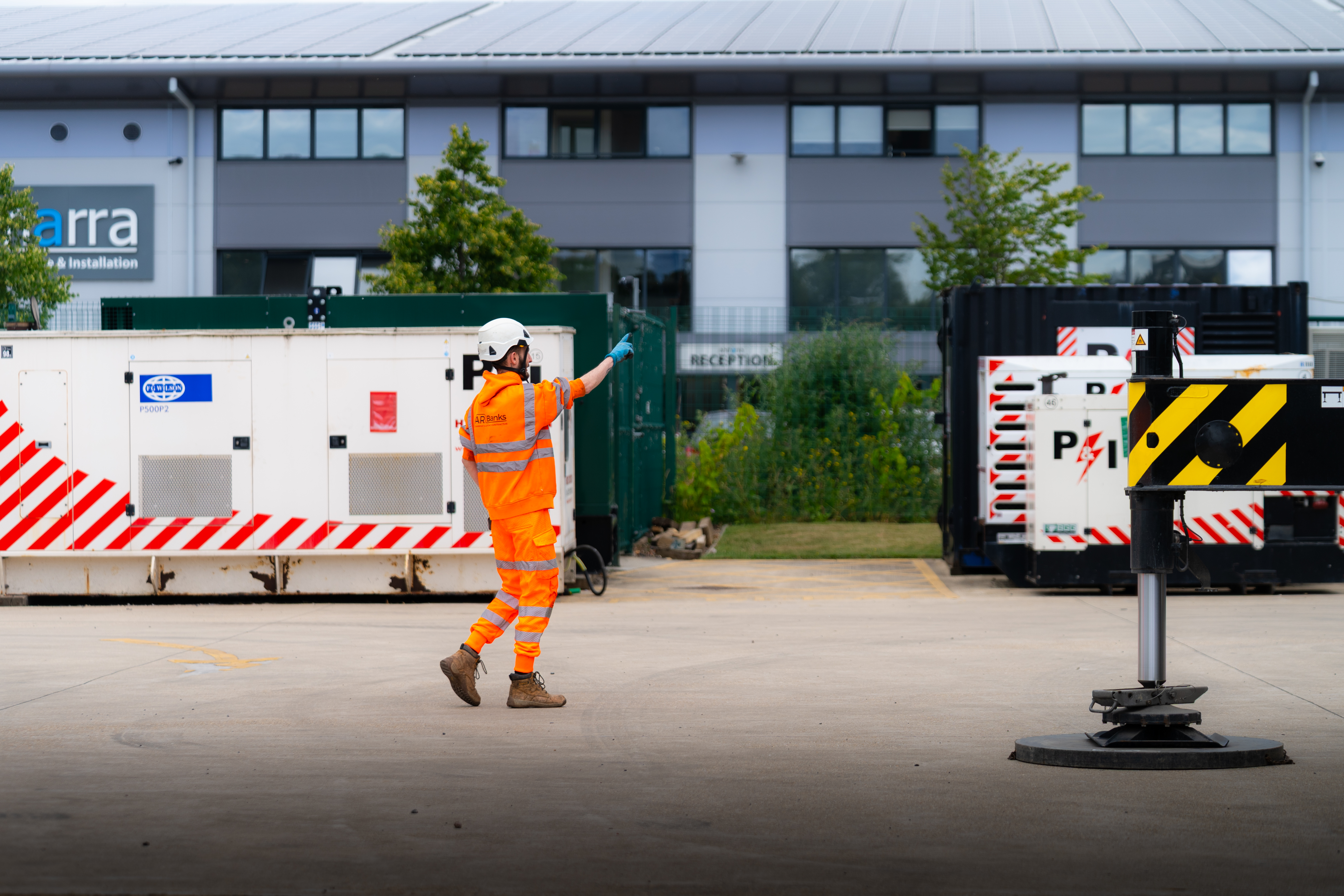
8 October 2026
A planned electrical shutdown should be easier to manage than an emergency outage. The date...
Read more...
What Signals Should a UPS or Generator Send to a BMS?
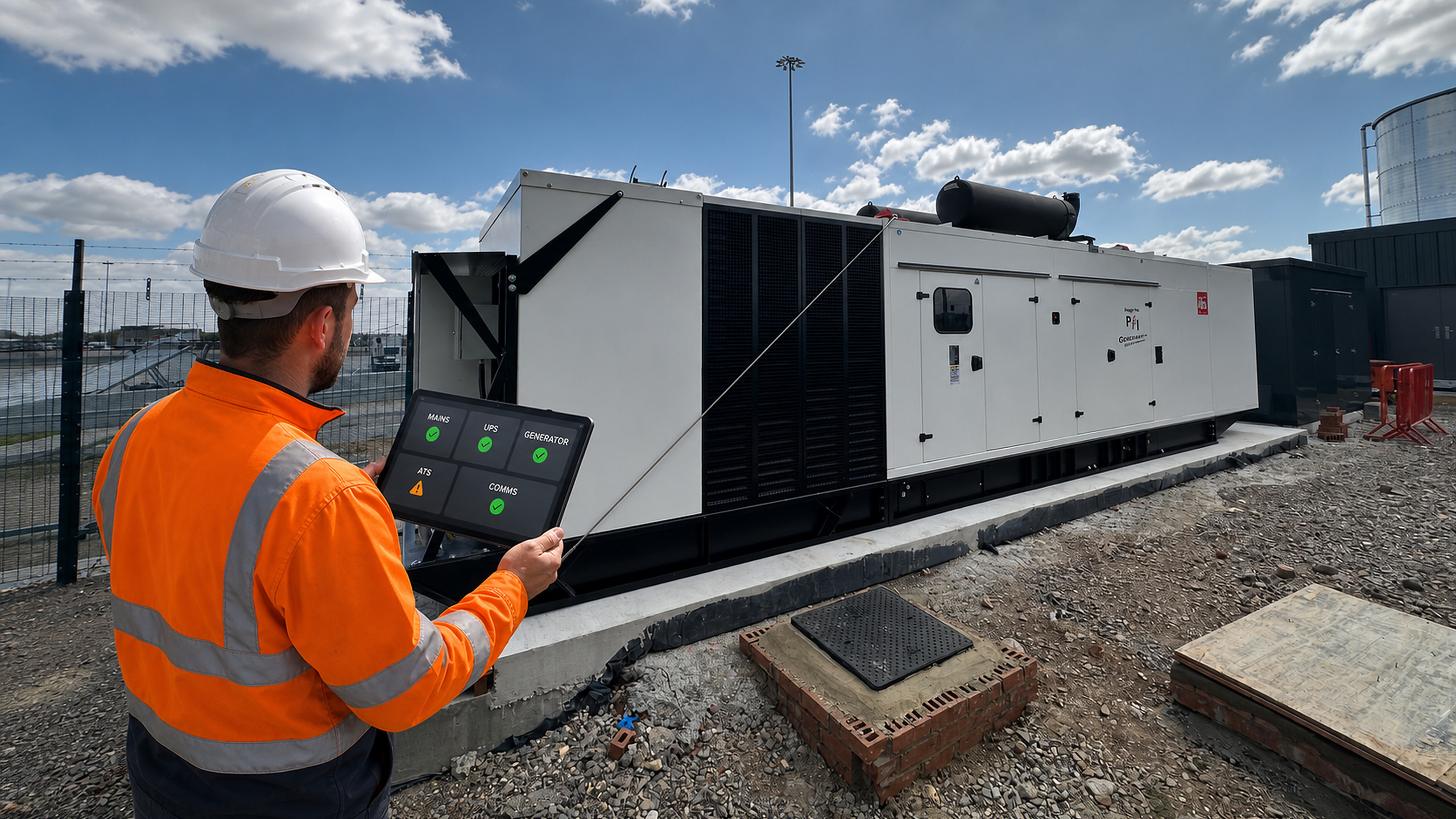
2 October 2026
A BMS can show that a generator is running or that a UPS has a...
Read more...
Generator Fuel Autonomy: How Many Hours of Backup Power Does Your Site Need?

25 September 2026
'How many hours will the generator run?' sounds like a simple fuel-tank question. In practice,...
Read more...
How Often Should an Automatic Transfer Switch Be Tested?

18 September 2026
An automatic transfer switch may remain in one position for months, then be expected to...
Read more...
UPS Fan Fault: Causes, Risks and Safe Next Steps

11 September 2026
Fans remove heat from power electronics, filters, transformers and other UPS components. If a fan...
Read more...
View all