

Latest News
Learn why a standby generator can start normally but trip, stall or become unstable under load, and what evidence helps engineers diagnose it.
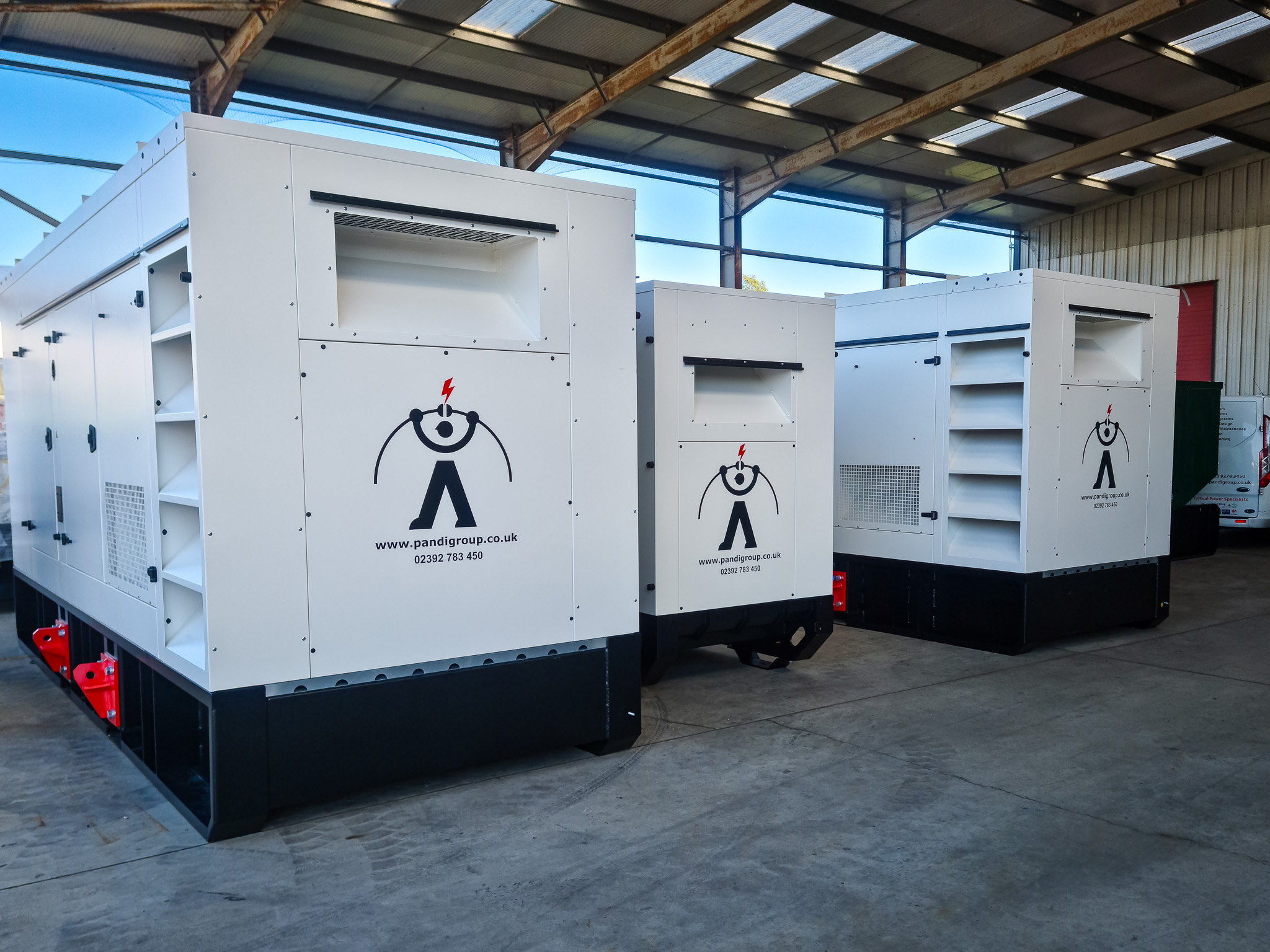
A standby generator can start promptly, reach normal speed and sound healthy—then trip, stall or become unstable as soon as the site transfers onto it. This is not unusual because starting the engine and supplying the building are different tests.
Off-load operation proves that the starting system, engine and basic controls can run with little electrical demand. Loaded operation adds fuel demand, heat, alternator current, voltage regulation, motor starting and protective-device behaviour. Weaknesses can remain hidden until that point.
Quick answer: why does a generator fail under load?
Common causes include an excessive or sudden load, motor-starting current, restricted or contaminated fuel, cooling problems, weak engine performance, alternator or voltage-regulator faults, incorrect protection settings, control issues and downstream electrical faults. The exact trip code and sequence are essential evidence.
First distinguish trip, stall and instability
The generator trips
The controller or protective device deliberately stops or disconnects the set after detecting a condition outside its limits. Record the first trip, not only the later common alarm.
The engine stalls or loses speed
The prime mover cannot maintain speed as demand rises. Fuel delivery, air, mechanical condition, governor response or an excessive load may be involved.
Voltage or frequency becomes unstable
The set remains running but the output moves outside the acceptable range, loads drop out or the UPS rejects the supply. Load steps, controls, regulation and compatibility may need investigation.
Cause 1: the load is larger than expected
Sites change. New equipment is added, old load schedules are not updated and temporary circuits become permanent. The generator may be suitable for the original design but no longer have the capacity or transient response needed today.
Compare recorded kW, kVA, current and power factor with generator ratings and the intended duty. Check phase balance as well as total load. A single heavily loaded phase can cause a problem before the three-phase total appears excessive.
Cause 2: the load arrives too quickly
Motors, transformers and other equipment can draw a high inrush current. Several loads restarting together after a transfer can create a much larger step than their normal running demand suggests. Voltage and frequency may dip, protective devices may operate or the engine may fail to recover.
Review the restart sequence, timers, contactors, variable-speed drives and building controls. Staging non-essential loads can be more effective than simply increasing the steady-state rating.
Cause 3: fuel supply cannot keep up
A generator needs substantially more fuel as load rises. Restricted filters, blocked vents, air ingress, weak lift pumps, contaminated diesel, water, poor day-tank transfer or low fuel can allow an off-load run but cause power loss under demand.
- fuel pressure or restriction alarms
- recent filter condition and service history
- tank level, valves and transfer-pump state
- water, sediment or microbial contamination evidence
- fuel lines, vents and leaks
- whether the fault develops immediately or after sustained load
Cause 4: cooling or airflow is inadequate
Loaded operation creates more heat. A restricted radiator, failed fan, low coolant, closed louvre, poor room ventilation or exhaust recirculation may cause high temperature after the set has carried load for a period.
Record ambient temperature, coolant temperature trend, louvre and fan operation and the time between load application and trip. Do not reopen or defeat guarding while machinery is running.
Cause 5: alternator or excitation problems
The alternator and automatic voltage regulator must maintain output as current changes. Excitation faults, connections, sensing, windings or regulation can lead to low voltage, high voltage or unstable output. These require competent electrical diagnosis with the correct manufacturer information.
Cause 6: protection is operating
Overcurrent, earth fault, reverse power, under/over voltage, under/over frequency and other protection may disconnect the source. Operation can reflect a genuine downstream fault, a generator problem, an application mismatch or settings that are not coordinated with the installation.
Do not increase or bypass settings to make the symptom disappear. Preserve event and relay data and have the protection study, settings and electrical condition reviewed.
Cause 7: the site distribution or transfer sequence is faulty
The generator may be healthy while a downstream breaker, cable, ATS, interlock or connected load is faulty. A trip that occurs only on one distribution section is useful diagnostic information. So is the difference between a controlled load-bank test and a real-site transfer.
Why a UPS may reject generator power
A UPS monitors its input and may remain on battery if generator voltage or frequency is outside its acceptance window. Rapid frequency movement, harmonics, generator sizing, load interaction and UPS settings can all affect the result. The UPS alarm log and generator trend should be compared on the same timeline.
What to record before reset
- exact first shutdown or breaker-trip code and timestamp
- kW, kVA, current by phase, voltage, frequency and power factor
- engine speed, oil pressure, coolant temperature and fuel readings
- which loads started immediately before the event
- ATS position and timing
- UPS mode and input alarms
- weather, room temperature and ventilation state
- recent maintenance, fuel delivery or electrical changes
How load-bank testing helps
A controlled load bank allows engineers to apply known demand in planned steps and observe generator performance. It can separate a generator-performance problem from some site-load problems and expose weaknesses that an off-load run misses.
It does not automatically prove every downstream circuit, ATS sequence, motor start or UPS interaction. The test plan should match the diagnostic question.
Preventing a repeat
- maintain the generator to manufacturer and site requirements
- keep the critical-load schedule current
- review motor starts and staged restoration
- test fuel quality and fuel-transfer arrangements where risk warrants it
- exercise the ATS and generator through an approved scenario
- retain trendable reports and close defects
- plan temporary power before diagnostic work removes resilience
Frequently asked questions
Loaded operation increases fuel, cooling and electrical demands. Excess load, inrush, fuel restriction, overheating, alternator faults, protection or a downstream fault may only appear then.
No. Under sizing is one possibility, but a correctly sized set can fail because of condition, fuel, controls, protection, sequence or the connected installation.
No. Record the event and identify the cause. Repeated energisation can damage equipment or expose a genuine downstream fault.
The exact first trip code plus timestamp is critical. Load, phase currents, voltage, frequency and engine readings around the event add context.
It can reveal generator performance under controlled demand and help narrow the cause, but site distribution, motor sequence and UPS interaction may need separate tests.
Heat build-up, fuel restriction, tank transfer, ventilation or a load that cycles later can create a delayed fault. The time trend helps diagnosis.
The generator input may be outside the UPS acceptance range or unstable under the interacting load. Compare both systems' event logs and settings.
A competent generator and electrical engineer should investigate using the model documentation, site design and safe test plan.
Prove useful power, not only a successful start
The difference between an off-load run and a reliable loaded response is where many hidden weaknesses appear.
Contact P&I Group for generator fault finding, load bank testing, servicing or temporary-power contingency.
Latest news
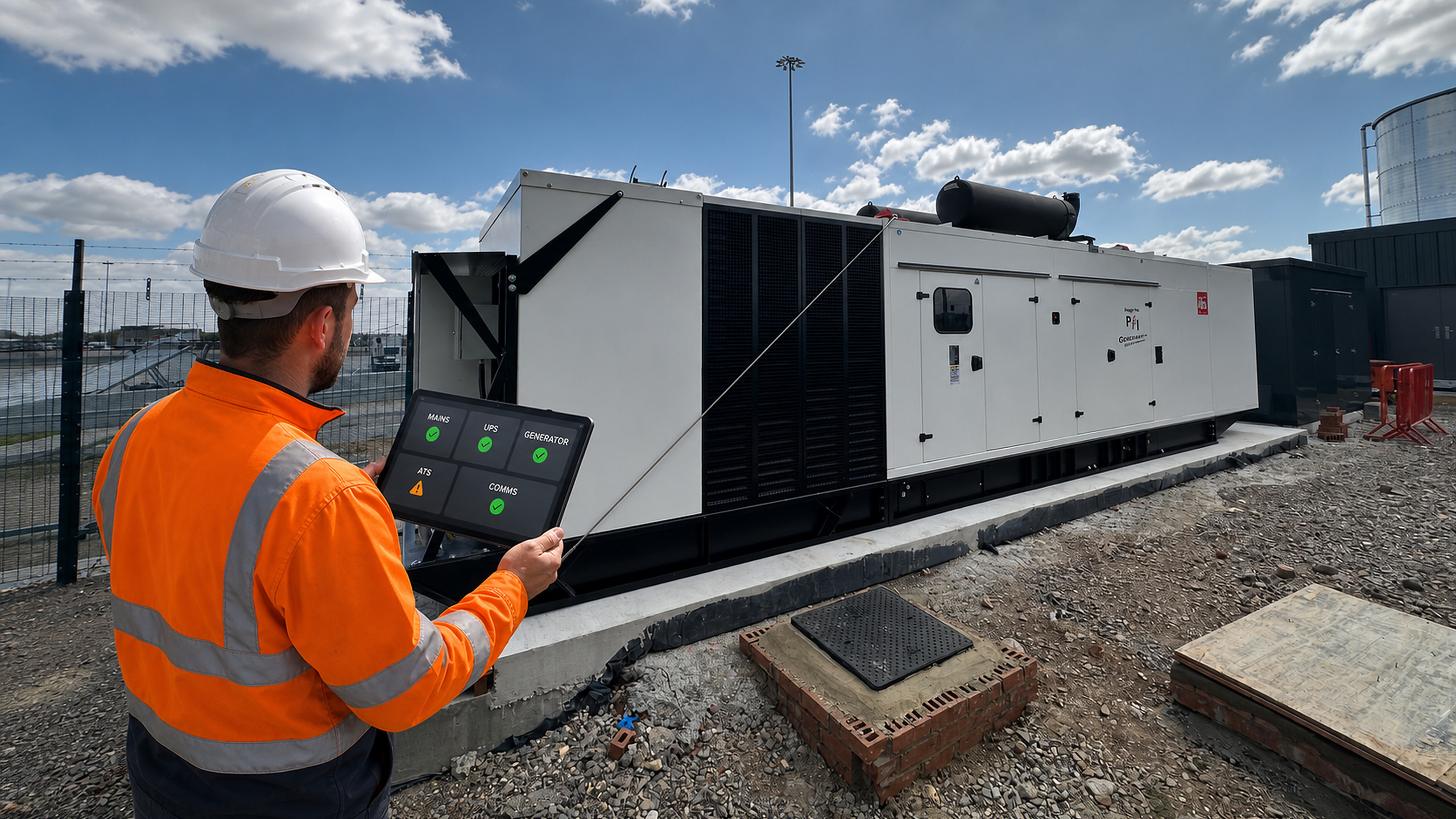
What Signals Should a UPS or Generator Send to a BMS?
2 October 2026
A BMS can show that a generator is running or that a UPS has a...
Read more...
Generator Fuel Autonomy: How Many Hours of Backup Power Does Your Site Need?

25 September 2026
'How many hours will the generator run?' sounds like a simple fuel-tank question. In practice,...
Read more...
How Often Should an Automatic Transfer Switch Be Tested?

18 September 2026
An automatic transfer switch may remain in one position for months, then be expected to...
Read more...
UPS Fan Fault: Causes, Risks and Safe Next Steps

11 September 2026
Fans remove heat from power electronics, filters, transformers and other UPS components. If a fan...
Read more...
Backup Power for Wastewater Pumping Stations During Peak Wet Weather

1 September 2026
A power failure at a wastewater pumping station is difficult at any time. During prolonged...
Read more...
View all