

Latest News
In a power cut, You need a clear checklist that helps you act quickly, protect your equipment and keep business disruption to a minimum. Learn more with P&I.

A power cut at work can stop operations in an instant, leaving staff uncertain and systems vulnerable. You need a clear checklist that helps you act quickly, protect your equipment and keep business disruption to a minimum.
Without a plan, even a short cut can lead to data loss, safety risks and lost revenue. Business owners need to have clear immediate and long-term actions to keep the lights on.
Here, we'll outline the essential steps to stay prepared, from immediate actions during an outage to strategies that strengthen your resilience for the future.
Immediate response to a power cut at work
When a sudden loss of electricity strikes, you need to act quickly to limit risks, protect equipment and keep people safe. A clear response reduces the effects of power outages on daily operations and helps maintain trust with both employees and customers.
1. Initial safety assessment and communication
Start with a quick safety check. Look for hazards caused by the power cut, such as dark pathways or equipment that has stopped mid-use. Poor visibility increases the risk of injury, so ensure emergency lighting or torches are available.
Communicate immediately with your team. Use text alerts or mobile notifications to confirm the outage and share instructions. You should also have a plan for staff to gather in the event of an outage, which is especially useful if the signal in the building is poor.
Keep a list of emergency contacts, including the electricity provider and local emergency services. This allows you to confirm whether the outage is localised to your site or part of a wider incident. Clear, fast communication prevents confusion and helps staff remain calm.
2. Secure critical operations and equipment with backup power
Protecting your IT systems and sensitive equipment is a top priority. Uninterruptible power supplies (UPS) will ensure your systems will experience little to no downtime when the power goes off, and backup generators can continue to power them in the longer term.
If you rely on refrigeration, medical devices, or manufacturing tools, it's especially important to keep them running with UPS and backup generators. Other less essential equipment can be powered down to prioritise these systems.
You should be testing your backup power systems regularly under load to make sure they're functional. If you experience a power cut and they are not working, you'll need to call in a 24/7 backup power specialist to get your business running again.
3. Protect employee health and safety
Employee health and safety must remain your main focus. A busy afternoon in a dark office or warehouse can quickly become unsafe if staff move around without light. Provide torches, glow sticks or emergency lighting so people can see clearly.
If heating, cooling or ventilation systems fail, monitor indoor conditions. During summer, high temperatures can affect health, while in winter, a cold workplace may not remain safe. Encourage staff to take regular breaks in areas with natural light or in nearby buildings that still have power.
Train employees on evacuation routes and assembly points. Make sure first aid kits remain accessible and that staff know how to assist colleagues with mobility issues during a power cut.
4. Manage customer expectations and service disruptions
Customers may notice the effects of power outages immediately, especially if your business relies on phones, online platforms or in-store services. Use pre-prepared communication templates to send mobile alerts, emails and social media updates explaining the service disruptions.
Be transparent about delays and provide realistic timelines for recovery. If you cannot continue operations on a day basis, direct customers to alternative contact methods or temporary service points.
Keep a record of all communications. This helps demonstrate accountability and maintains trust if recovery takes longer than expected. Even in a short outage, clear updates can protect your reputation and reassure clients.
Longer-term business continuity planning
Power outages can disrupt operations, reduce employee productivity and cause financial losses. You can reduce these risks by creating a clear business continuity plan, investing in reliable backup power solutions, and maintaining open communication during and after disruptions.
5. Create a robust business continuity plan
A business continuity plan helps you maintain critical functions during outages and return to normal service quickly. Start with a risk assessment that identifies vulnerable areas, such as IT systems, customer service and supply chains.
Include contingency plans for each department. For example, staff who can work remotely should do so. Employment law solicitors advise reviewing employee contracts to ensure obligations are met if staff cannot work during downtime.
Your backup plan should also address communication with potential customers. Use social media platforms or automated phone systems to keep customers informed about service delays. By preparing in advance, you reduce customer dissatisfaction and protect your reputation.
Clearly define resolution times for critical functions. This ensures your team knows the maximum acceptable downtime for each area and can prioritise recovery efforts effectively.
6. Backup power options and generator management
Backup power solutions are an essential component of any continuity strategy. If you don't yet have this in place, now is the time to consider it – especially if your business has already been impacted by power outages. You'll need to consider what type of backup power option works best for your business needs – and usually, a mix of options is the best way forward.
Uninterrupted Power Supplies (UPS) provide continuous operations when the grid fails, preventing complete shutdowns. A UPS can bridge short outages, while a backup diesel generator supports longer disruptions.
Diesel generators remain an effective choice because of their fuel efficiency and ability to handle heavy loads. To avoid fuel shortages within your system, you should keep plenty of fuel on site and perform regular fuel level checks.
7. Proactive maintenance and regular inspections
Even the best backup systems fail without proactive maintenance. Schedule periodic inspections by qualified technicians and generator maintenance specialists to check fuel systems, batteries and control panels.
Regular maintenance should include oil changes, load testing and safety checks. Comprehensive servicing packages often cover these tasks and help extend equipment life.
Proactive maintenance reduces resolution times when outages occur. It also prevents unexpected breakdowns that could leave your business without power at a critical moment.
Frequently asked questions
You need clear procedures, training and backup to reduce risks during a workplace power outage. Planning ahead helps you protect staff, maintain operations and recover quickly. Here, we answer some of the most commonly asked questions around what to do during a power outage at work.
What are the essential components of a power outage emergency response plan for businesses?
Your plan should identify critical equipment, communication methods and safety measures. Include backup power options such as generators, emergency lighting and surge protection. Make sure you also define roles so staff know who is responsible for decisions and updates.
What steps are involved in creating a comprehensive business continuity plan?
Start by assessing which processes and business systems are most vulnerable to disruption. This is important in all businesses, and can cover essentials like servers, computers and machinery. It's especially important in sectors like healthcare, where life-saving equipment and refrigeration must be a priority.
Document recovery strategies for power, data and communications. Maintain an updated inventory of equipment and ensure you have supplier and utility contacts available. Ensure you have the right backup power in place, and test your systems under load regularly to ensure they can cope in an emergency.
Latest news
Temporary Power for Planned Shutdowns: A Site-Readiness Checklist

8 October 2026
A planned electrical shutdown should be easier to manage than an emergency outage. The date...
Read more...
What Signals Should a UPS or Generator Send to a BMS?
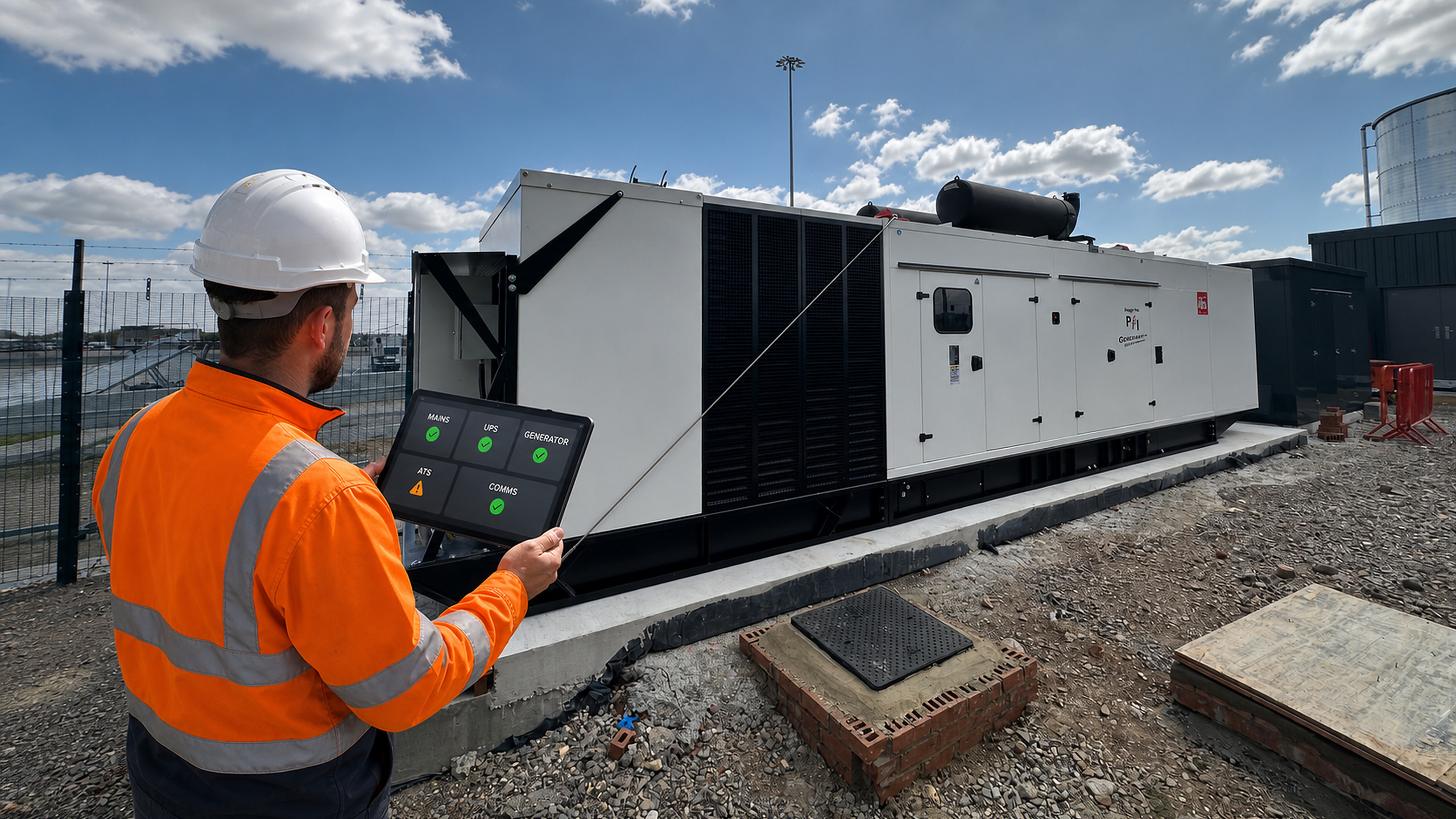
2 October 2026
A BMS can show that a generator is running or that a UPS has a...
Read more...
Generator Fuel Autonomy: How Many Hours of Backup Power Does Your Site Need?

25 September 2026
'How many hours will the generator run?' sounds like a simple fuel-tank question. In practice,...
Read more...
How Often Should an Automatic Transfer Switch Be Tested?

18 September 2026
An automatic transfer switch may remain in one position for months, then be expected to...
Read more...
UPS Fan Fault: Causes, Risks and Safe Next Steps

11 September 2026
Fans remove heat from power electronics, filters, transformers and other UPS components. If a fan...
Read more...
View all